

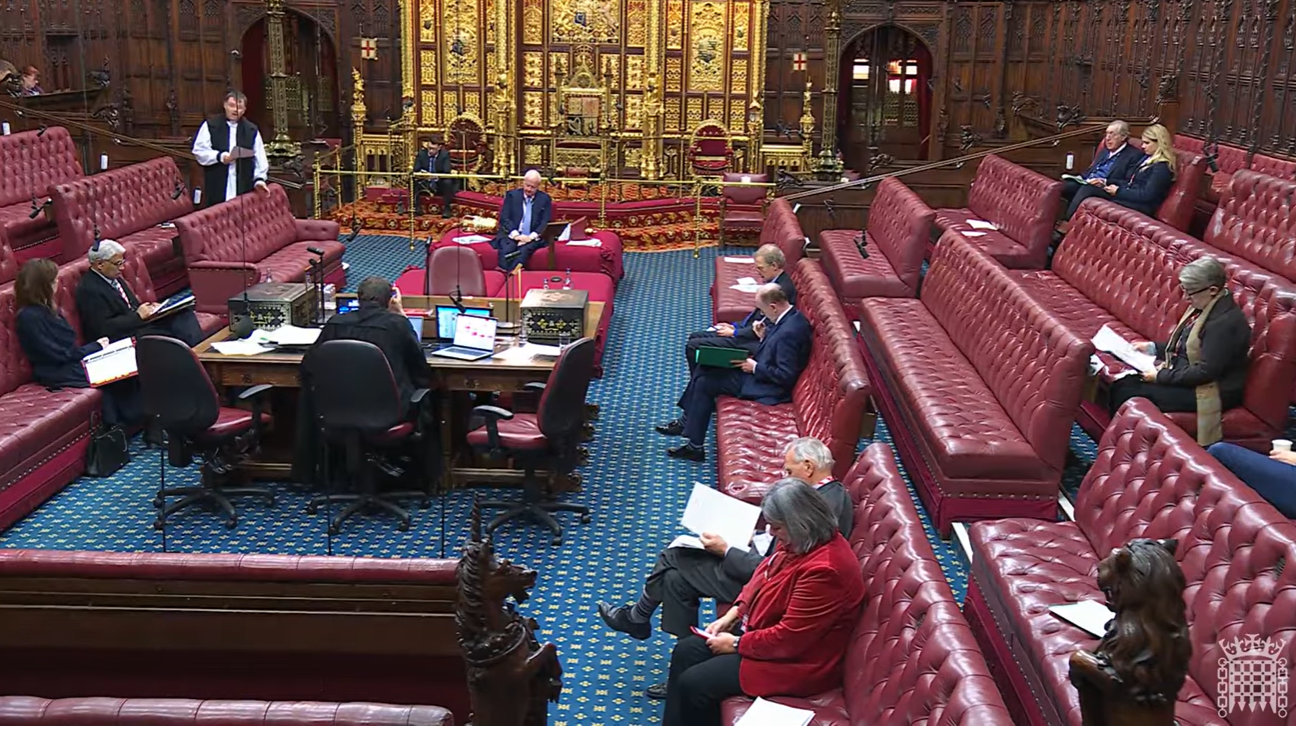
The role of the Church of England Pensions Board in tackling the tragic human and environmental cost of abandoned mines and mining waste was revealed by the Bishop of Norwich in a speech in the House of Lords.
The Rt Revd Graham Usher said it was a timely debate because of the geopolitical tensions the world faces, many connected to minerals needed to power our economies today and in the future.
The debate, on Thursday January 8, addressed the responsibility of the UK for abandoned mines and mining waste in former British colonies.
Many countries have been left with dangerous disused mines and mining waste – risking large scale disasters and loss of life, and significant environmental damage.
The Bishop of Norwich said the Church of England Pensions Board has recently looked at the role of mining, recognising its importance for many modern industries, but also examining its legacy.
“The board recognises the systemic importance of mining to many of the other sectors upon which modern life depends and which the board is also invested in, such as aviation, shipping, construction, autos, technology and energy,” he said. “But a particular focus of the board’s work has been on this issue of legacy, particularly related to mine waste”
The Board has led a global initiative supported by the mining industry and the United Nations, to drive safety in waste management. This resulted in a global standard to manage waste.
There is also a Global Investor Commission, set up and chaired by the Church of England Pensions Board and working with the United Nations, tackling the problem of mines operated by companies which no longer exist.
Backed by other investors with £17 trillion under management, it is using innovative financial incentives to ensure historic mines and mining waste are properly managed.
This includes reprocessing waste to extract more minerals, and restoring abandoned mine sites – the first, in South Africa, could provide a model for elsewhere in the world.
The Bishop of Norwich said: “Investors have clearly indicated their expectation that the industry must address existing legacies while ensuring that new and operating sites create lasting value for people and nature.”
He asked whether the Government would support the pilot scheme, saying it not only benefits communities blighted by the legacy of historic mining, but also the whole mining sector and our own economy which is closely linked to what we extract.