Thank you to Revd Tim Yau for writing this article.
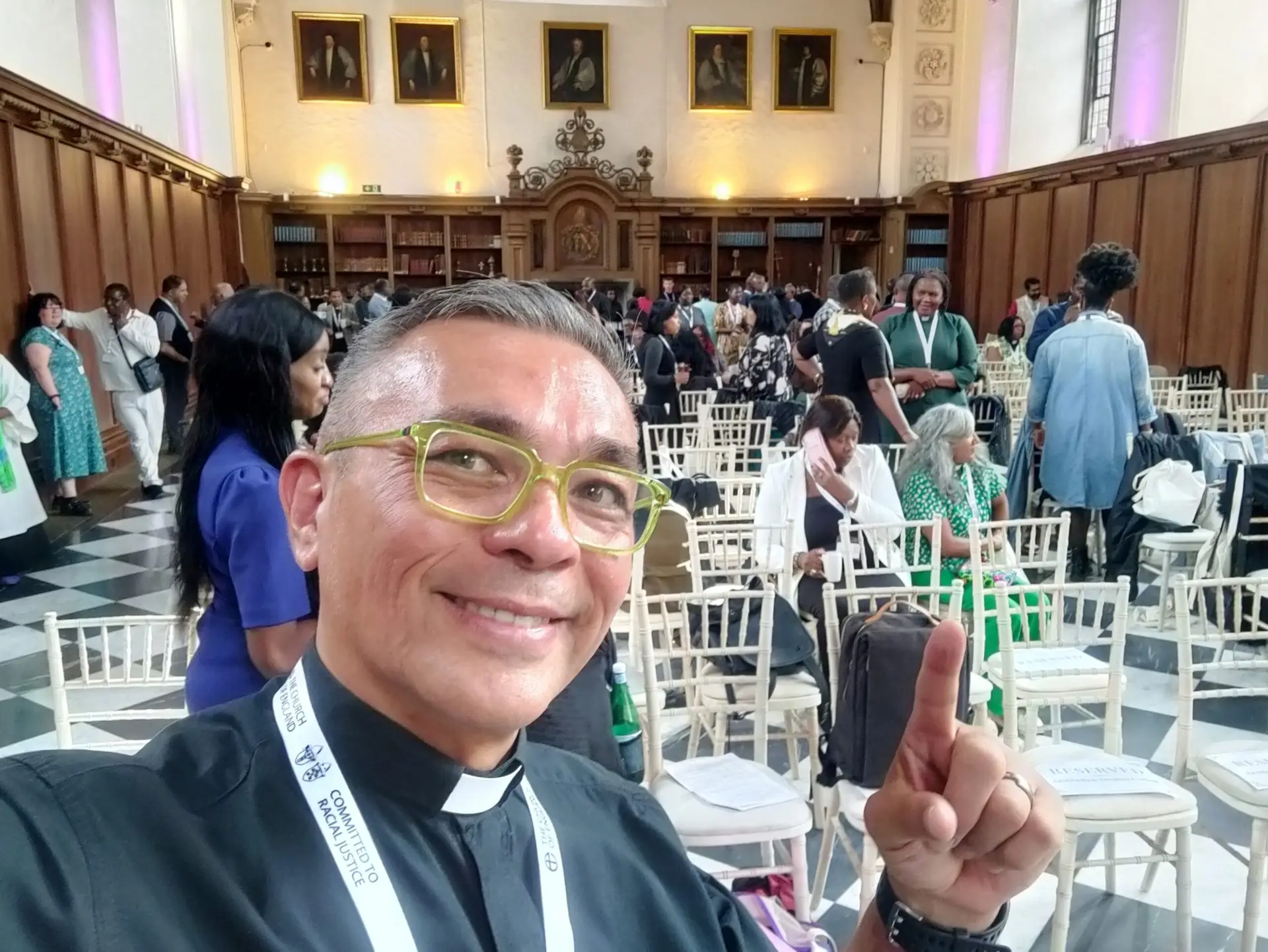
Walking through the gates of Lambeth Palace on 8 September 2026, I felt something I don’t often feel in the Church of England: a sense of being at home in the very centre of our institution. The Global Majority Heritage (GMH) and UK Minority Ethnic (UKME) Clergy, Ordinands and Lay Ministers Gathering was not simply another meeting, nor a symbolic gesture. It was a concrete sign that our presence, our leadership, and our voices are being welcomed into the heart of the Church. For many of us, that matters more than words can say.
Throughout the day, as we prayed, talked, listened, and shared food, I kept returning to one simple truth: belonging is not created by policy but by relationship. That line, offered by one of the speakers, stayed with me. It captured the spirit of the gathering, an opportunity not only to reflect on racial justice but to experience it.
Some ask why a specific day for GMH/UKME ministers is needed. I understand the question. But the answer becomes clear when we look honestly at the world we are ministering in. Bishop Rosemary Mallet and Bishop Arun Arora named the painful realities we cannot ignore: the suicide of Professor Jason R. Day; the casual and harmful use of the N-word justified under “free speech”; masked vigilantes marching in Dover and Portsmouth; riots in Thetford; clergy facing down anti-immigration protestors at Doncaster Minster; the ongoing controversy around Project Spire; the murder of Henry Novak; and racial attacks in Belfast and in Chorley, where a six-year-old child had the N-word drawn on his head and arms. These are not isolated incidents. They are symptoms of a rising nationalism where “might is right,” echoing the fascism of the 1930s.
In such a climate, gathering as GMH/UKME ministers is not about separation, it is about strengthening one another for the work of reconciliation and justice. As Bishop Arun reminded us, we are called to be people of reconciliation, but that calling is hard to live out when someone is shouting abuse in your face. Naming racism as sin is not divisive; it is truthful. And truth-telling is part of our vocation.
We also spoke frankly about the slashing of the Racial Justice Unit budget by half. As one bishop said, “a budget is theology with numbers.” The current allocation of just 0.5% of the Church of England’s total budget is not enough to implement the recommendations of From Lament to Action, now five years old. Archbishop Stephen Cottrell put it plainly: “racial justice is not about turning up the volume but changing the record.” That requires investment, courage, and cultural transformation.
Yet amid the challenge, there was hope. One priest shared that when he arrived in the UK in the 1990s, he could count the number of UKME/GMH clergy on one hand. Now, standing in a room with over a hundred ministers from across the world, he saw a vision of the Church that is already changing. Another line from the day struck me deeply: “Voice without influence is tokenism.” Our gathering was a reminder that our voices matter and that influence is growing.
Having both Archbishops present, answering our questions directly, was profoundly validating. It signalled that racial justice is not a side project but central to the Church’s future. As the Diocese of Chichester’s Racial Justice Toolkit puts it, “perhaps the measure of our leadership is not how many people hear our voice, but how many people discover their own voice through our leadership.” That is the kind of Church we are striving to build.
We have made real progress. But we still have a long way to go. Changing the culture of the Church, and fully implementing From Lament to Action, will take persistence, honesty, and grace. The gathering at Lambeth Palace reminded me that we are not alone in that work. We are hopeful, encouraged, equipped, and inspired. And we are moving forward together.