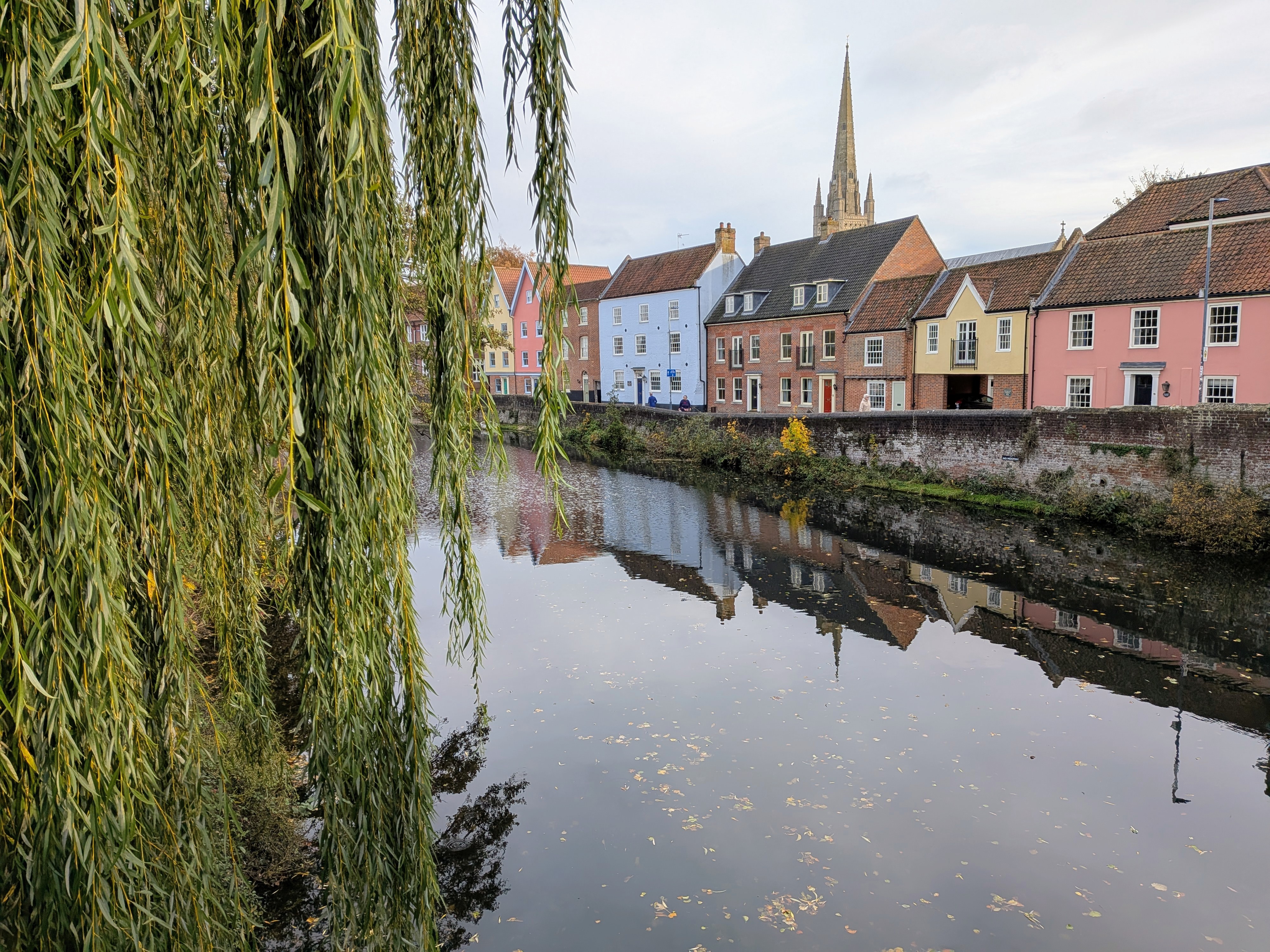


The Bishop of Norwich talked about this summer’s mass fish death in the River Wensum during a debate on drought in the House of Lords.
He asked whether the Government would fulfil its promise to act to protect chalk streams during discussion of a report about dealing with drought from the parliamentary Environment and Climate Change Committee.
Bishop Graham Usher, who is the Church of England’s lead bishop for the environment, and whose first degree was in ecology, focused on the effects of drought on chalk streams and soil health.
“Drought is a recurring theme throughout history, bringing hardship, uncertainty and a stark reminder of humanity’s dependence on the natural world,” said Bishop Graham.
“The Bible offers some striking descriptions of drought and its consequences. The prophet Jeremiah describes the distress of people sent to draw water, only to discover that the cisterns were empty. Similarly, in the story of Elijah, the brook dries up because there has been no rain in the land. These accounts illustrate how quickly the things we take for granted can disappear and how vulnerable human life becomes when essential resources are scarce.”
But he said we should not see drought as an act of nature beyond our influence.
“Climate change, excessive consumption and the pressures we place on natural resources all invite serious consideration of our responsibilities. We are reminded that water is precious, that its availability cannot be taken for granted, and that we have a duty to protect and preserve our environment for future generations.”
Talking about chalk streams he said: “These precious ecosystems, of which about 85% of all the 200 chalk streams in the world are found in England, well up from aquifers. Consecutive months of below-average rainfall mean aquifers fail to recharge during the winter.”
He told fellow Lords: “In August the River Wensum, which flows through the centre of Norwich, experienced a mass death of fish (and also the species that are not visible because of course the fish all floated when they died). Many other species were killed as well after a heavy downpour of rain flushed contaminants out of city’s drains into the Wensum.”
He went on to ask where soil health comes in the Government’s priorities for responding well to drier summers.
“We are totally reliant on six inches of soil to sustain human life,” said the Bishop. “Healthy soils store water, support plant growth, provide habitats for countless organisms, and play an important role in maintaining the balance of our ecosystems.
“When soil is rich in organic matter and has a healthy structure, it can absorb and retain moisture, helping crops and plants withstand periods of dry weather, and also holding water higher in their catchments becoming natural flood management infrastructure.
“Conversely, compacted, depleted or degraded soils struggle to hold water, making the effects of drought more severe.”
He said drought disrupts soil microbes and nutrients, adversely impacting invertebrates, plants and birds. He added that depleted, drought-affected soils are more susceptible to wind and topsoil erosion, and flash flooding, and when peaty soils dry out they release carbon and become very susceptible to fire.
“Perhaps the lesson of drought is not simply that we need more rain, but that we need to take better care of the ground that receives it,” said Bishop Graham.