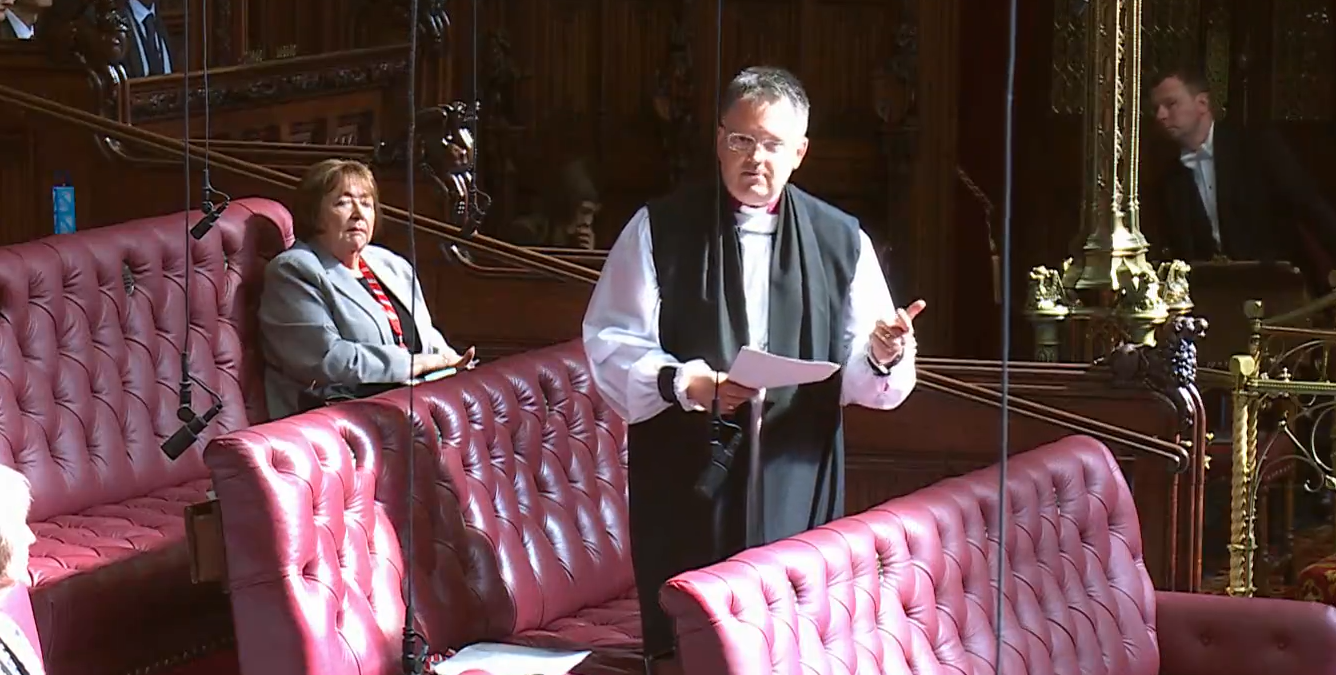
The Bishop of Norwich spoke about the covenant between society and the Armed Forces and about whole society preparedness for conflict during the Second Reading of the Armed Forces Bill in the House of Lords.
He said: “Covenant is an ancient word with deep resonances in Judaism, Islam and Christianity. It is about gifts offered and received, about commitments made and honoured, lived in mutual reciprocity. When we ask much of our Armed Forces – and, God forbid, we might need to ask more of them and their families in the years to come – pledging a commitment to what they can expect in return for all that they give and, for veterans, have given, is the mark of a grateful society.”
He welcomed the Bill’s proposal to enshrine the Armed Forces covenant fully in law and spoke of the role of churches, Church of England schools and Armed Forces chaplains in supporting servicemen and women and their families.
The Bishop also asked the Minister for Defence about the resources being made available to meet the Strategic Defence Review’s goal of a ‘whole-of-society approach’ including widening participation in national resilience.
“Given the troubling and dangerous times we live in, the Church of England’s General Synod has been considering how we might be called to be the Church in a time of war,” said the Rt Revd Graham Usher. “This does not sit easily with the Jesus that I encounter in the gospels proclaiming peace-making and that most difficult of commands about love of neighbour and love of enemy.”
“The Church’s task is therefore to work and pray for peace, and to shape and form peacemakers, peacebuilders and peacekeepers. I would argue that, while not scaremongering, we need also to prepare for the threats we face.
“The Church and other faith groups would play a key role in supporting communities in the event of a major conflict. Resilience, community solidarity and hope are all key Christian virtues that people have valued in previous wars and would be much needed in any future conflict.”