

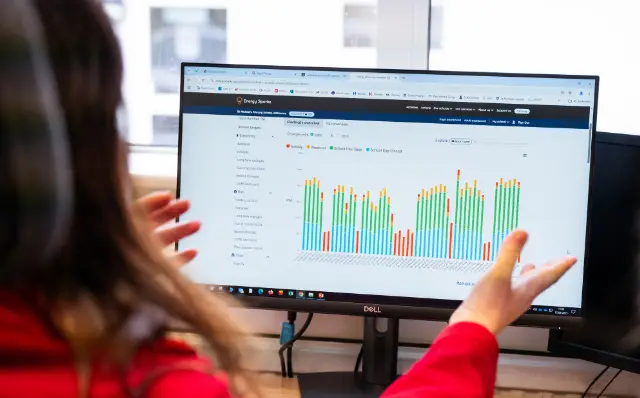
St Nicholas Priory CE VA Primary School has reduced its gas consumption by 44 per cent after identifying significant heating use outside school hours, saving £9,800 and cutting carbon emissions by 30 tonnes of CO2 over the past 12 months.
The school joined Energy Sparks at the start of the 2024/25 academic year and quickly established an eco-team. The School Site Manager also attended Energy Sparks training to help staff better understand how energy was being used across the site.
Data from Energy Sparks revealed that 76 per cent of the school’s gas consumption was taking place when pupils were not in school. While staff expected some out-of-hours usage, the scale of it came as a surprise. Heating systems were running for longer than anticipated, including at weekends.
Following a review of its heating controls, the school reduced heating hours during the school day, lowered heating set temperatures and switched heating off at weekends. With support from boiler engineers and the school’s IT Manager, a remote-control system has since been introduced to manage the boiler more effectively.
The changes delivered substantial savings. Energy Sparks found that 94 per cent of the school’s gas reduction came from cutting out-of-hours consumption.
Richard Cranmer, Education Adviser for the Diocese of Norwich, said:
“When the Headteacher at St Nicholas Priory School told me how pleased she was that they had almost halved their gas consumption, I was immediately intrigued to learn more. The way in which they have engaged with Energy Sparks is a superb example of what can be done when the right information is available to identify where energy is being wasted. Not only is this now saving the school a significant sum of money, it has engaged the interest of both staff and children in playing a key role in our collective responsibility to reach carbon net zero.”
Improving heating controls is often one of the first steps schools take when they begin monitoring energy use, according to Energy Sparks. The organisation encourages schools to check how much gas is being used outside school hours, review whether heating is operating at weekends and during holidays, and assess boiler start and finish times to ensure buildings are only heated when necessary.
The experience at St Nicholas Priory School demonstrates how a closer look at energy data can uncover hidden costs. In this case, relatively straightforward changes have led to lower bills, reduced emissions and better control of the school’s heating system.
Image credit: Energy Sparks