

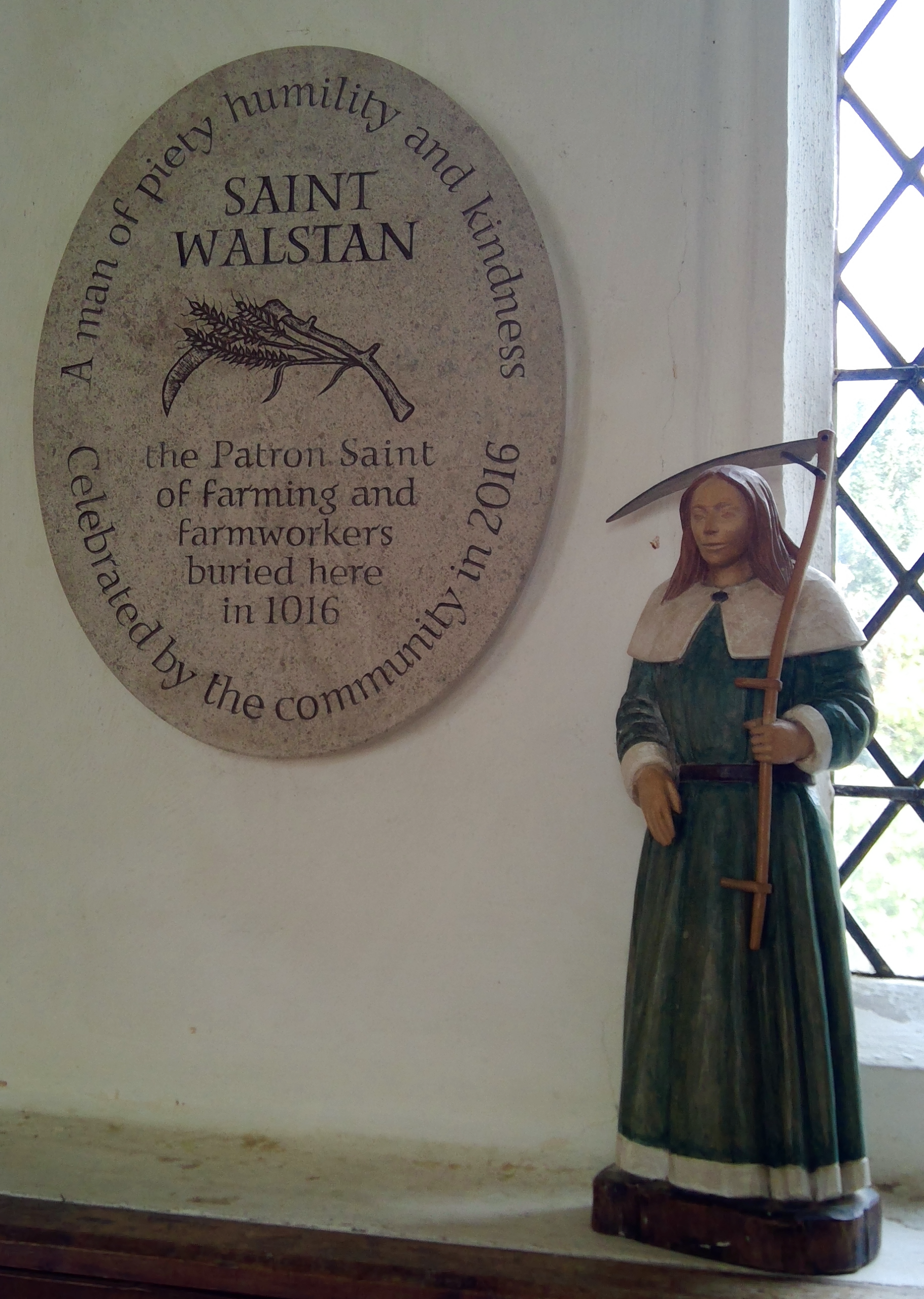
A thousand year old story rooted in Norfolk’s countryside was marked in May as people gathered in Bawburgh for St Walstan’s Day.
St Walstan, who died in 1016, is buried at St Mary’s and St Walstan’s Church in Bawburgh. He is known as the patron saint of farm workers, agriculture and sick animals, and his story is still closely linked to villages around Norwich.
The Revd Laura Montgomery said: “St Walstan’s Day is an opportunity to remember his life and to celebrate the place he, the Church and the holy well have held in the faith of local Christians through the centuries. It connects us with generations of pilgrims who came seeking God’s presence, healing and hope.”
Walstan is thought to have been born locally into wealth or royalty but chose to leave that life behind after feeling called by God to work as a farm labourer in Taverham. He became known for his kindness and for stories of healing linked to his life.
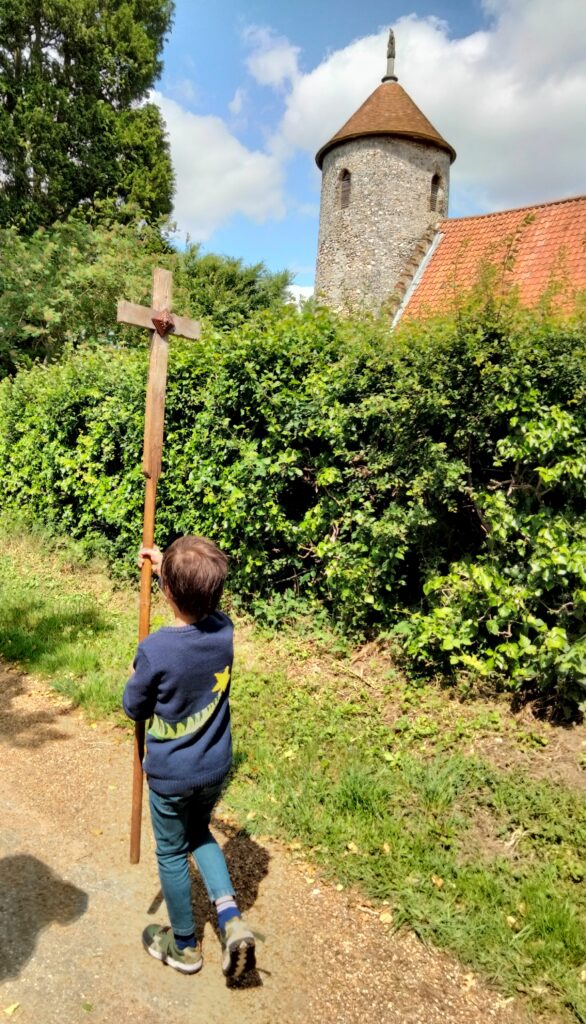
Before his death, he is said to have had a vision that his body should be placed on a cart pulled by two white bulls. The bulls stopped at Bowthorpe, Costessey and Bawburgh, where springs of water appeared. These became holy wells and are still visited today.
In medieval times, Bawburgh became one of Norfolk’s main pilgrimage sites, especially for working people. Pilgrimage declined after the Reformation, but the well in Bawburgh remains a place of prayer.
His story remains meaningful in Norfolk because of its connection with the land. Walstan became the patron saint of agricultural workers, and his life still points to our shared dependence on the natural world and those who produce our food.
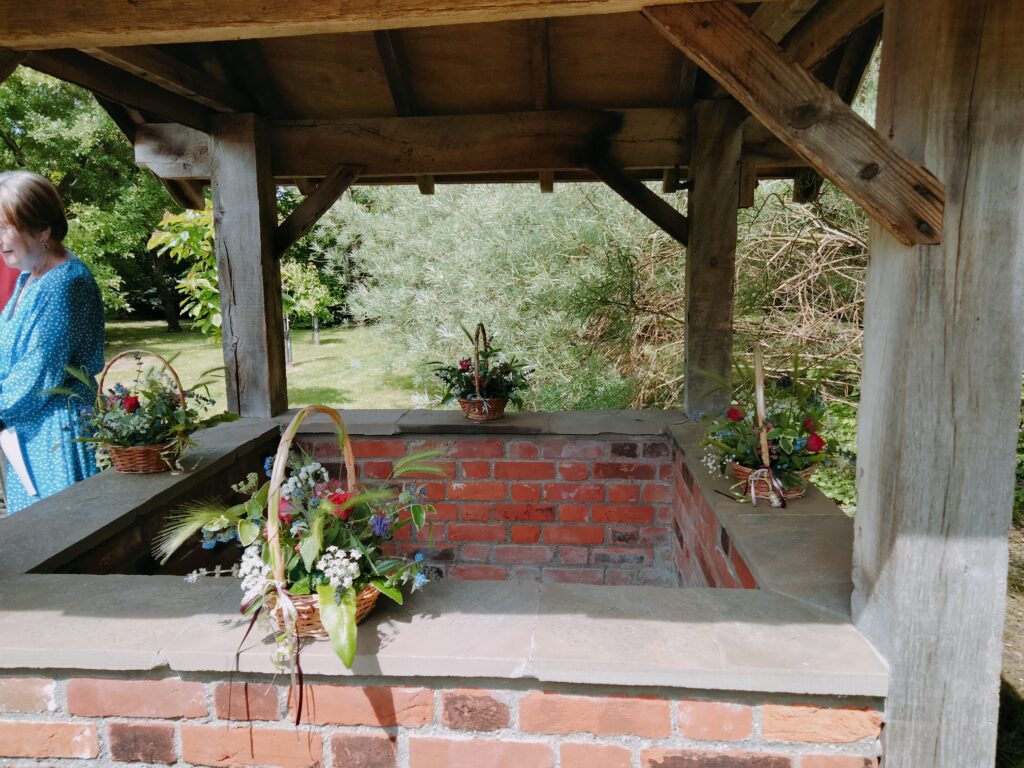
This year’s St Walstan’s Day was marked with a service at the church, followed by a walk to the holy well where prayers were said.
The Revd Laura Montgomery said: “The walk to the well is a small pilgrimage, where we pray together in a place that has inspired people for centuries, and listen to the sounds of both creation and the working landscape.”
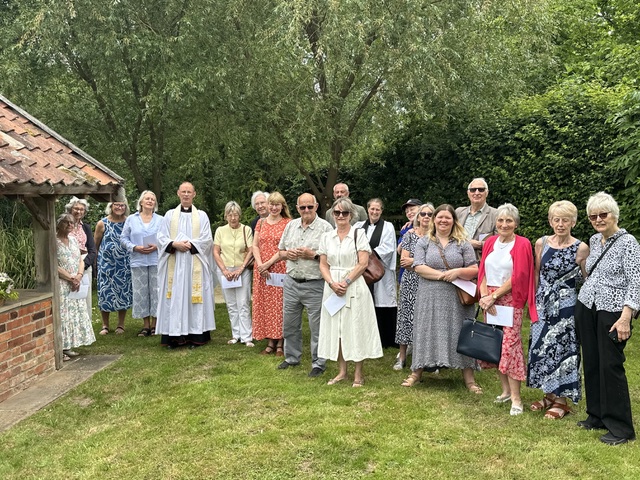
This year’s St Walstan’s Day was marked with a service at the church, followed by a walk to the holy well where prayers were said. The Dean of Norwich preached at the service, comparing St Walstan to St Francis of Assisi. Although Walstan lived around 200 years earlier, he said they shared similar values of community, care for others and connection with the natural world, describing Walstan as Norfolk’s own St Francis.
The day also remembered 2016, when the thousandth anniversary of Walstan’s death was marked by a joint outdoor service with Anglican and Roman Catholic bishops.
Bawburgh continues to draw visitors, with the annual walk to the well still an important part of village life.
“His life speaks to things that still matter today – simplicity, care for the poor, connection to the land, and finding holiness in ordinary work.”
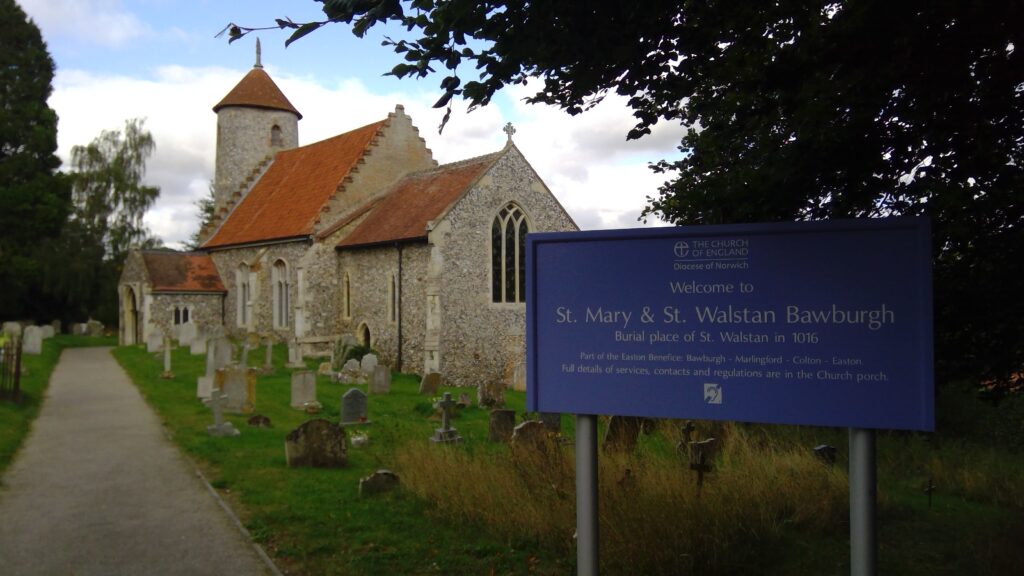
Image credits: The Revd Laura Montgomery