
An Easter message from the Bishop of Norwich is published in the Eastern Daily Press today (Saturday April 4). Bishop Graham writes:
At the heart of Easter are the words “I have seen the Lord.” They were said by Mary Magdalene in Jerusalem. That city, like the whole region, is living under the dark clouds of war. Friends message me from bomb shelters, their sleep disturbed and their minds fearing further escalation.
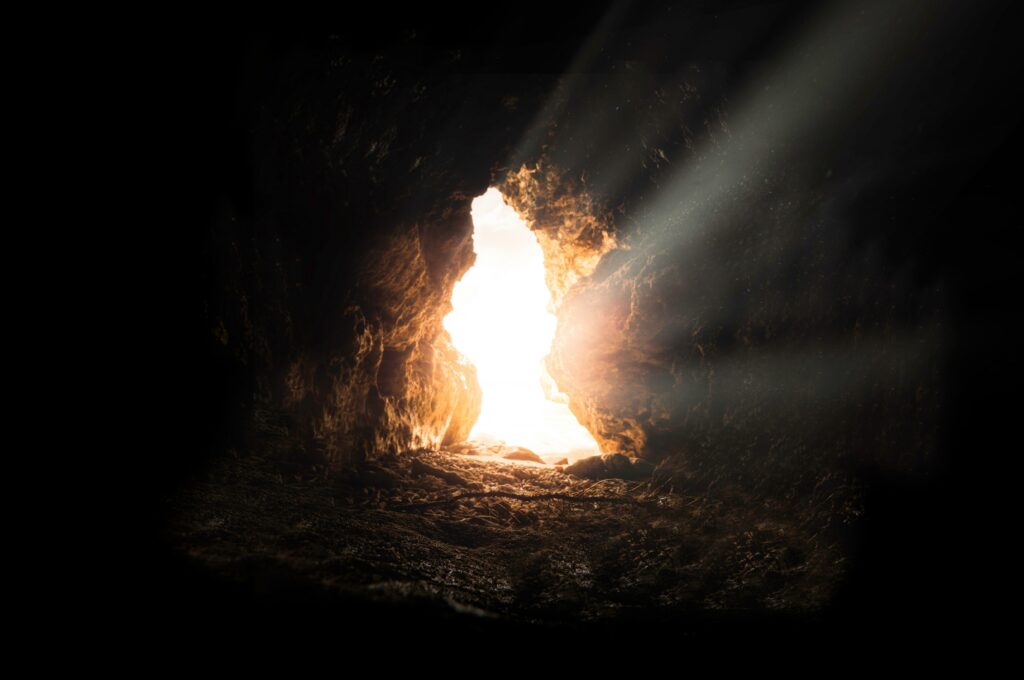
Easter itself begins in darkness. Not only the dim light before dawn, but the deeper darkness of grief, confusion, and fear. Mary Magdalene came to the tomb while it is still dark because that is how the world felt to her. And, if we are honest, that is how the world can feel for many today.
In times of conflict, darkness is not abstract. It is seen in ruined cities, displaced families, and the quiet anxiety carried even by those far away. At present there is a sense that events are spiralling beyond control, shaped by forces we feel powerless to resist. A cloak of heavy darkness hangs in the air.
Mary came to the tomb in that kind of darkness. She was not expecting resurrection. She assumed the worst. Even when she found the stone rolled away, her first thought was not hope but distress about a grave robbery. Easter, then, does not begin with clarity. It begins with confusion. That matters, because it means the Easter story speaks directly into uncertain and unsettled times.
When two of the other disciples arrived, they saw but did not yet understand, and they left. Mary stayed. She remained in the place of grief, standing outside the tomb, weeping. In a culture that often urges us to move on quickly or to distract ourselves from pain, her response is striking. She stayed present to loss. And it is there, in that honest sorrow, that something begins to change.
Even then, recognition did not come easily. Jesus stood before her, speaking to her, and she did not know him. She mistook him for the gardener. Present but not recognised. In moments of crisis, people often ask where God can be found. The Easter narrative offers a quiet response: nearer than we might think, though not always in expected ways.
The presence of Jesus may be glimpsed in acts of compassion, in quiet courage, in those who refuse hatred or continue to hope against the odds. Like Mary, however, we may not immediately recognise what is before us.
Early Christian writers reflected deeply on this scene. The Venerable Bede described Jesus as the true gardener, cultivating the human heart. Gregory the Great suggested that Jesus plants within Mary the seeds of love. Recognition began not with spectacle, but with a personal encounter: Jesus spoke her name – “Mary” – and everything changed.
That moment carries a powerful implication. In a world where people are often reduced to statistics or labels, Easter insists on something more fundamental: each person is known. Each life has dignity. The risen Jesus calls individuals by name, even in fear, grief, and confusion.
Mary’s instinct was to hold on, but she was told not to. The resurrection is not about returning to the past; it is about being sent forward into a new reality. Easter points not backwards, but ahead – to a future shaped by hope rather than fear, by life rather than death.
Mary was then given a task. She became the first witness to the Resurrection, the first to proclaim, “I have seen the Lord.” It is significant that this role is entrusted not to the powerful or the certain, but to someone who has wept, doubted, and struggled.
So this Easter, I invite you to remain present to suffering rather than rushing past it; to remain open to unexpected signs of resurrection hope; to listen for the quiet, personal call of God in your life; to let go of the past while trusting that something new is still unfolding; and to bear witness – not with perfect certainty, but with honesty and hope. The world, still marked by conflict and longing for peace, needs to hear those hope-filled words, “I have seen the Lord.”
Happy Easter – Alleluia!