
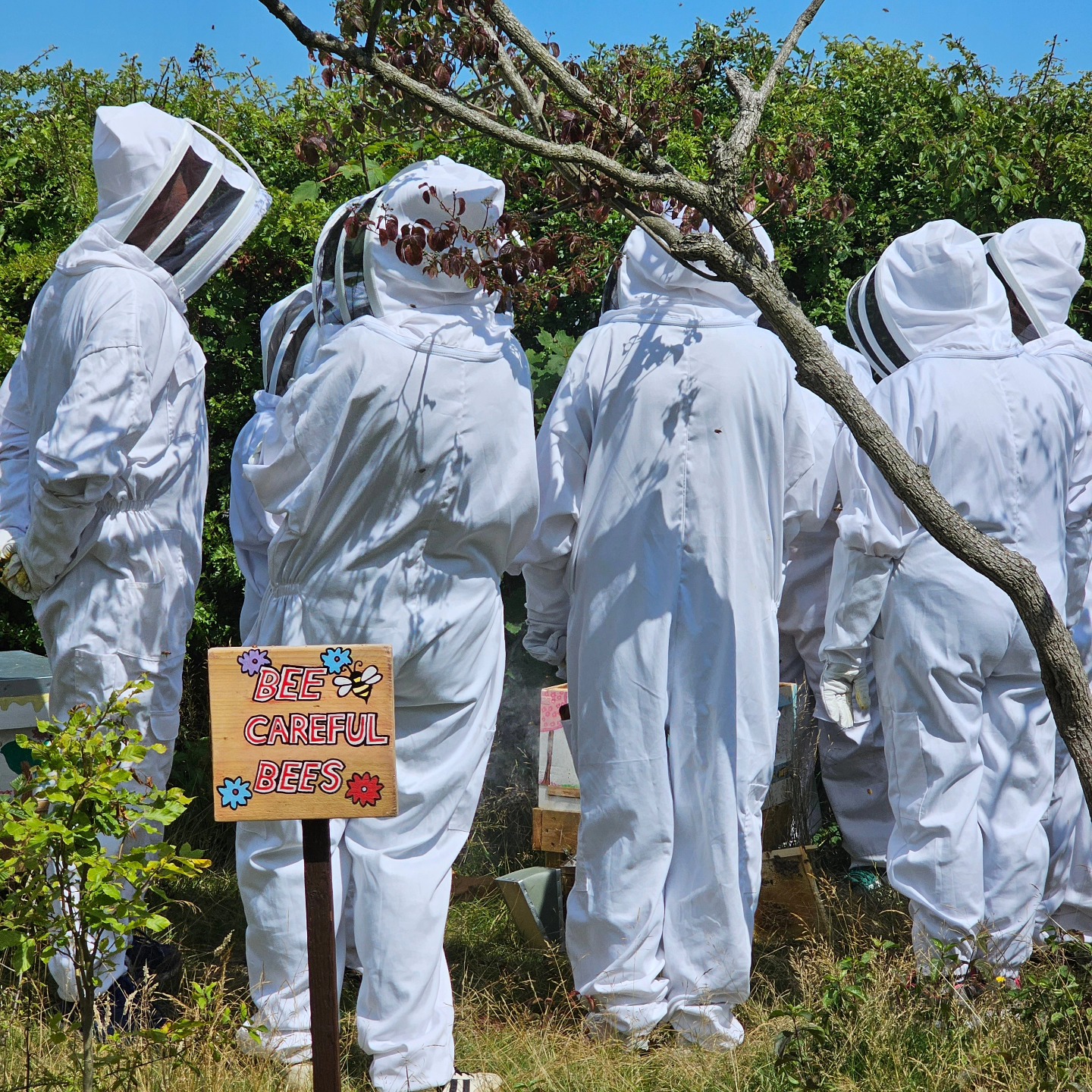
A new project took shape at St Mary Magdalene Church, in partnership with local community CIC Project Apis, that supports food security, wellbeing and community through beekeeping.
Jamie McBride from Project Apis, which is based in the Great Yarmouth area, explains: We work with churches and communities to create small shared apiaries that support biodiversity, well-being, and connection with nature. Project Apis CIC was set up to make beekeeping accessible to everyone, especially in places where people might not otherwise get the chance to connect with the natural world.”
Vicar Revd Matthew Price said: “We had 20 people in the initial training, with only five were from the church – the rest joined us from the wider local community. New connections were made, with one individual already becoming a member of our church family and moving towards confirmation.
“The nature-connection factor was really good for people’s wellbeing ; some were experiencing mental health issues and noticed a marked improvement as they engaged with the project outdoors. A sense of purpose, coupled with being outside, learning alongside others created a wonderful context to share the joy of being a part of God’s great creation.
“Jamie’s enthusiasm was infectious and he helped us with the know-how and to get the project off the ground, with ongoing support. I was struck by the enthusiasm it also unlocked in some people – they got so excited about bees!”
Jamie says: “A typical community or church apiary involves an initial setup cost covering hives, bees, protective equipment, tools, and training. Depending on scale, this usually isn’t prohibitive, with ongoing costs kept relatively low once established. Where possible, we support sites to access external funding, including grants and local sponsorship, so cost is not a barrier.
“My hope is to grow this across church communities in a simple, supportive way. Churches are natural community hubs, and apiaries can offer a shared, practical project that supports wellbeing, learning, and care for the environment. I’m always happy to have an informal conversation to explore whether this could be a good fit for a particular community.”
To explore a possible project, contact Jamie at info@project-apis.co.uk or 07944 69915
To chat with Matthew about how it’s working at St Magdalene, contact him: matthew.price@stmmgorleston.org.uk
A note about beehives and native bees
There is some discussion over whether hosting a honey bee colony might present nectar competition for wild bees. Until any other evidence suggests otherwise, we’re happy to go with the statement made in the following article:Wild Bees vs. Honey bees – thaliawhite, who concludes thus:
The good news is wild bees and honeybees coexist very well. Honeybees are generalists — they will forage across a wide range of plants, both native and exotic. Native bees, however, are often species-specific with what plants they visit. Since they tend to gravitate toward slightly different foraging areas, the presence of honeybees does not necessarily exclude native bees, especially in areas designed to attract both. In this regard, native and non-native bees do not heavily compete against each other — assuming there is enough variation in vegetation to provide for both their needs.
There will be a general advice page about beekeeping in churchyards soon. Keep an eye out on this page: Managing Churchyards for Biodiversity