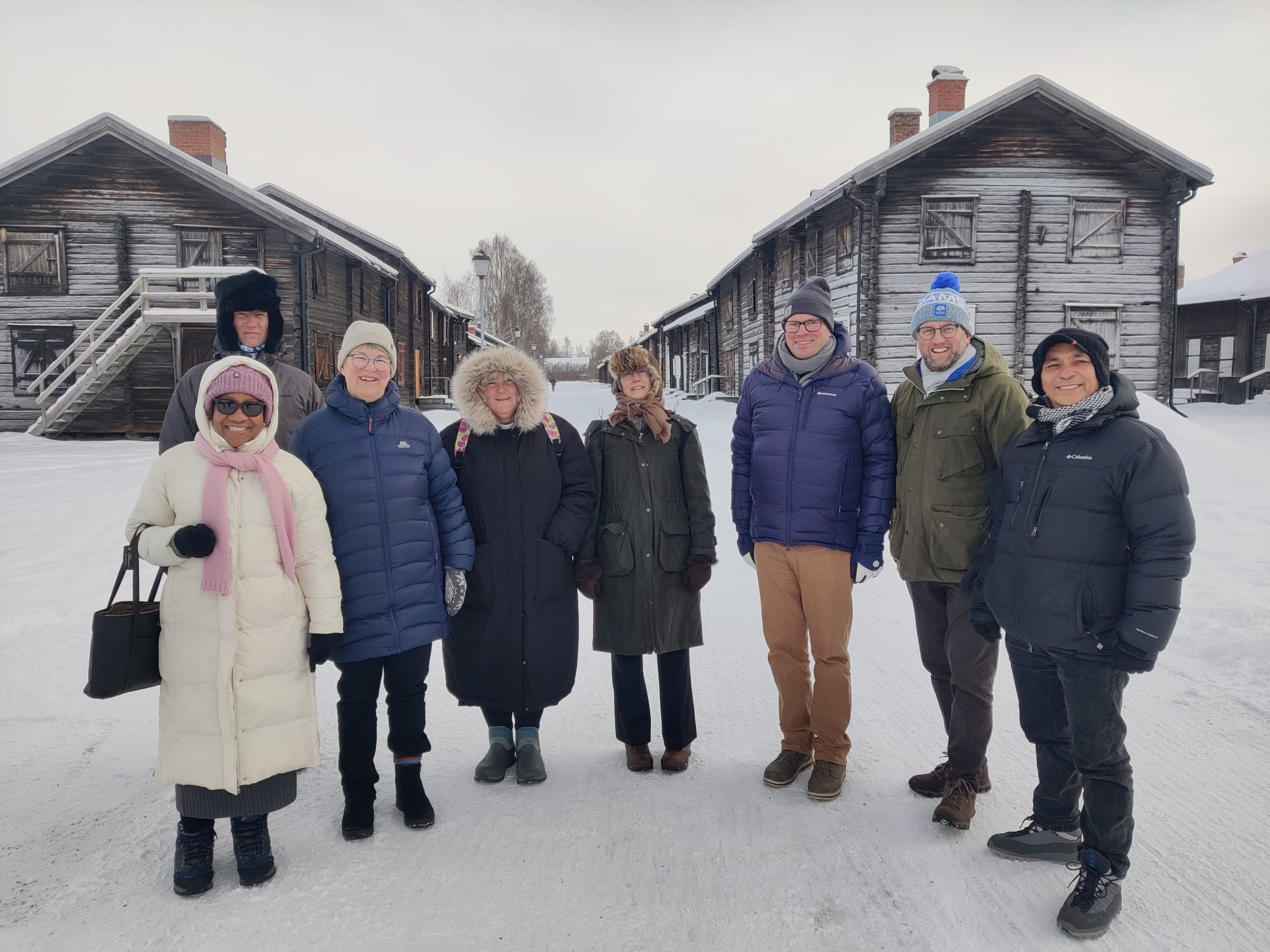
This article was written by the Bishop of Lynn, the Rt Revd Dr Jane Steen.
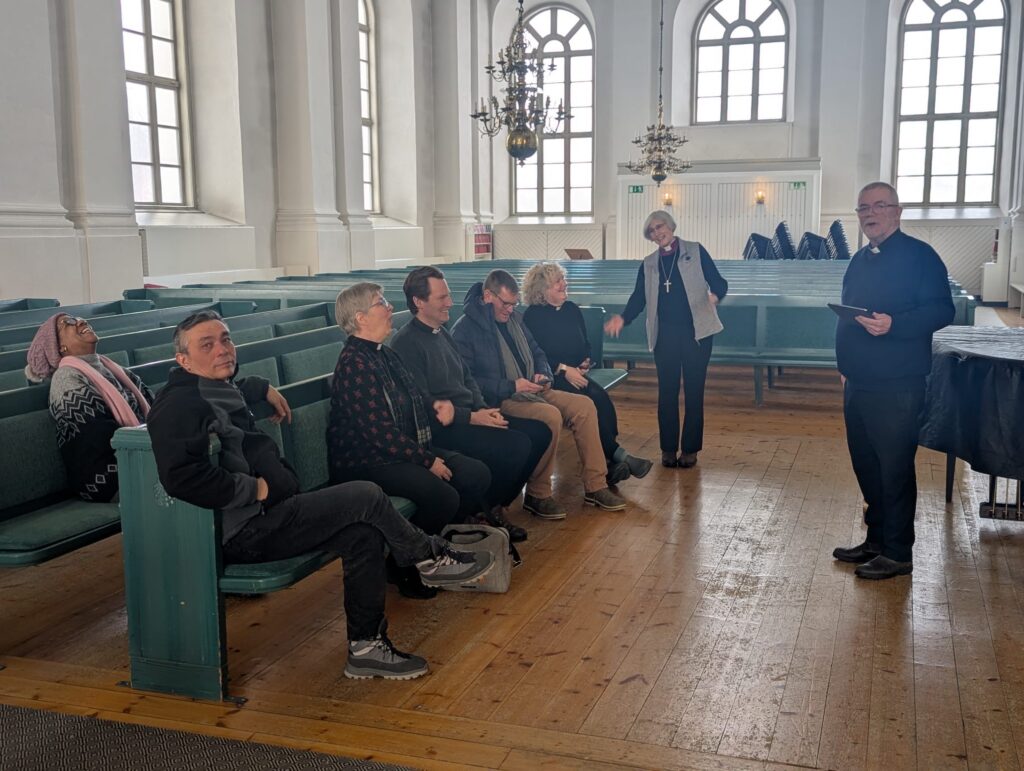
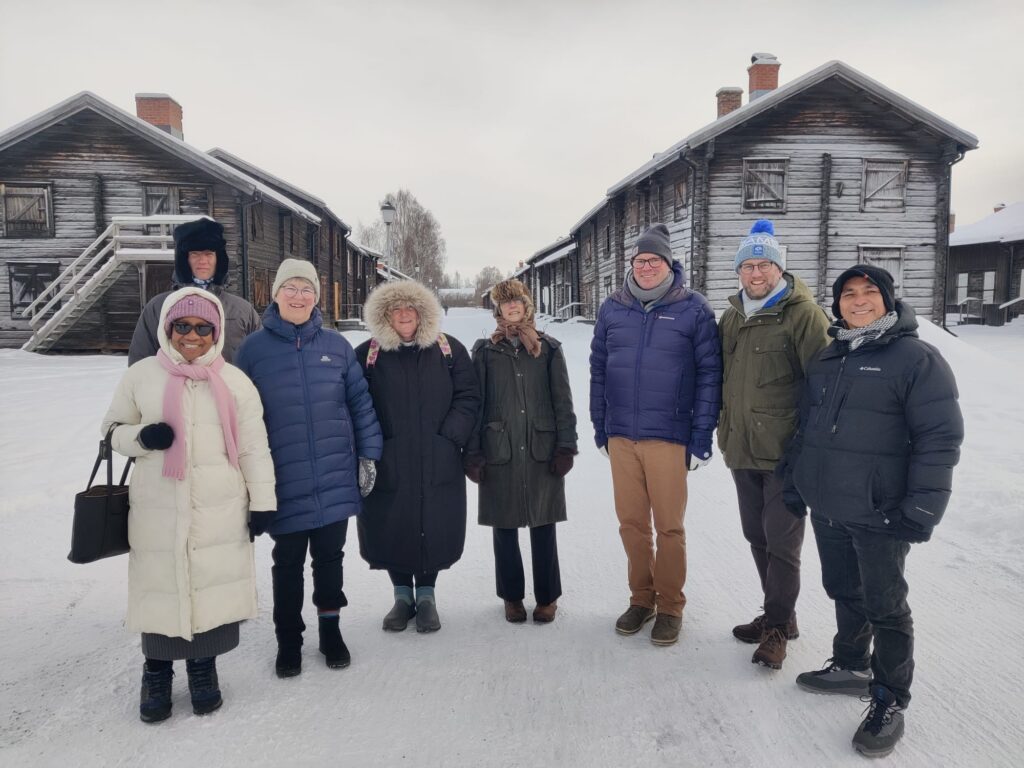
The Diocese of Norwich has been linked with the Diocese of Luleå in Northern Sweden for over twenty years and a group from Norwich visited in February 2026. Our contexts are similar and yet very different.
Rural Dioceses
We are both rural dioceses with much of our populations in small villages. We are both part of the Porvoo communion of churches, in full communion with each other. We are both in Western Europe with histories of close ties to the State. But Luleå is much further north than we are, and has a population of around 550,000 people in an area the size of England and Wales combined, which makes the distances of some of our multi-parish benefices look rather small.
State Support
The Swedish church has formerly been a state church, in a way that was never the case for the Church of England and remained so until 2000. The churches still enjoy state support for their buildings, though this is declining, and an income from ‘church tax’. Parish populations may elect to pay around 1% of their income to the parishes, and in Lulea over 50% of the population does this. The church has a reputation for very good social work and a developed diaconate which largely provides this.
Young people
Like much of the Church of England, however, it is seeing something of a ‘quiet revival’ among young people while it is also struggling with the rise of Christian nationalism, with church attendance and asking questions about how to proclaim the gospel.
Proclaiming the gospel in troubled times
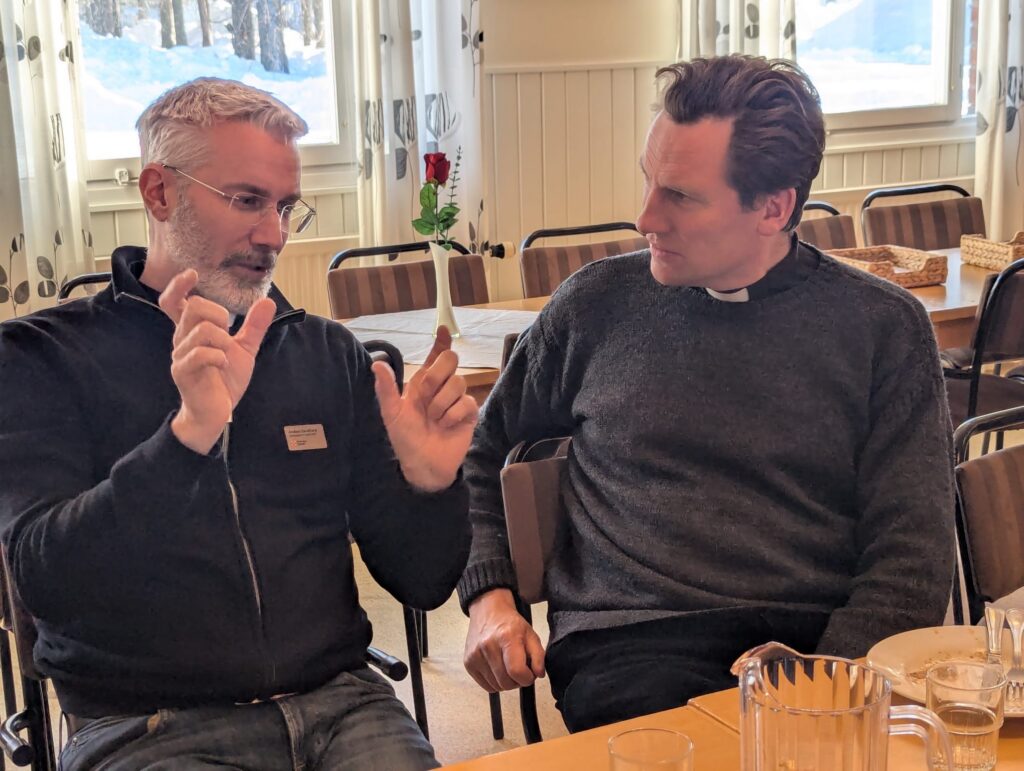
Luleå has a diocesan link with the Evangelical Lutheran Church in Liberia as well as with Norwich and the Archdeacon of Lynn and I went out to participate in a conference in Skellefteå with Liberia on proclaiming the gospel in troubled times. The world feels a more dangerous place than it did ten years ago, so that there is all the more reason for Christians to maintain links across national borders, sharing hope as well as fear, maintaining contacts lest the time come when they are harder to make for the first time. Luleå diocese shares a border with Finland and we visited Piteå, a town to the north west Skellefteå, where Russian soldiers are buried in the churchyard. History sometimes feels very close.
The conference was organized by the diocesan head of parish development. The Bishop of Liberia reflected on the role of the Church in rebuilding a war-torn country, emphasizing the importance of building trust, meeting people’s physical as well as spiritual needs, and never shying away from a share in suffering. His words spoke powerfully to me as I considered the rise of Christian nationalism. How can the Church in Europe proclaim the love of Jesus beyond our often-fragmented society? Perceived moral failure in our society might spark passion for the flag of Saint George and offers another way to tell the story of our patron saint: perhaps the son of Syrian Palestinian and Turkish parents, a speaker of Greek, buried in what was then Roman Palestine – by no means English, not even a visitor here yet a martyr for the faith we proclaim even, perhaps especially, in troubled times. Like the church in Kiruna, whose removal north appeared on so many TV screens, the church in England and Sweden also needs to be on the move if we are to proclaim God’s love to those not traditionally drawn to either of our churches. The methodology of ABCD is helping in many areas, as are some of our national initiatives.
Authenticity of our living
In the light of national and global concerns about climate change, social isolation, misinformation and alienation, there is much we can do with our eco work and with the authenticity of our living so that we intentionally and consciously live as the church which expects the Lord’s return. We are the inheritors of a tradition which is sceptical about social norms, which has been accused of ‘turning the world upside down’ (Acts 17:6) and which proclaims God who declared ‘I am’. God is not an object, another thing of which an image can be made. God is a verb, and we too as Christians are called to live so that others too may have life and have it abundantly.
Transformed by Christ: Prayerful, Pastoral, Prophetic
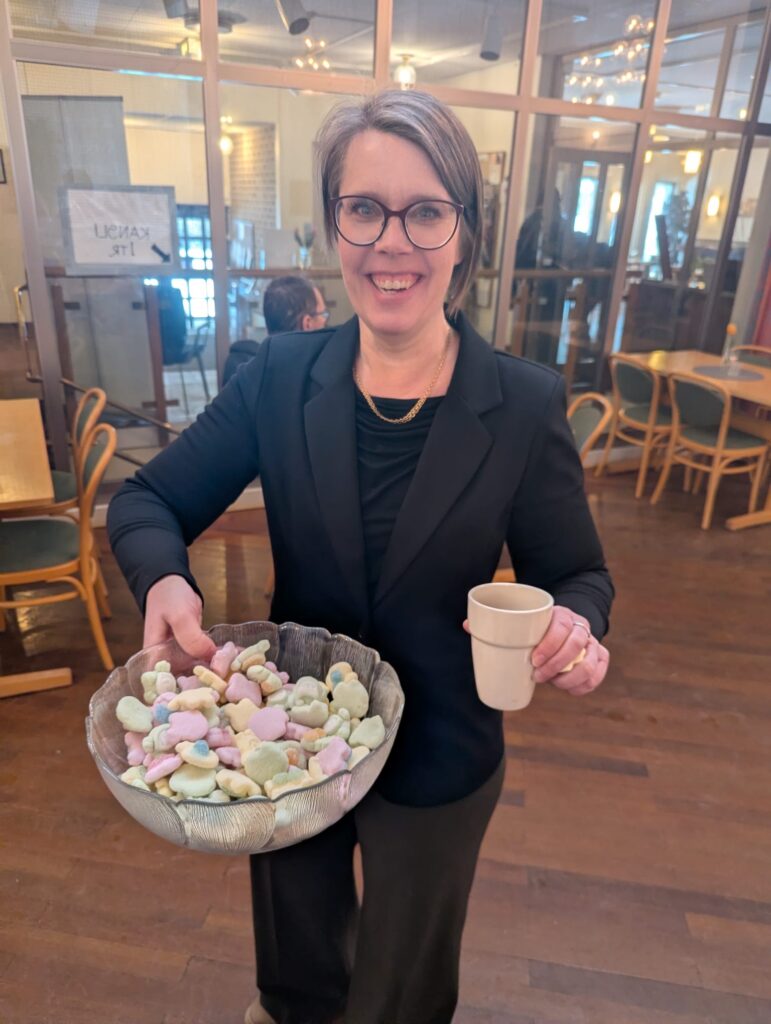
We do so in actions as much as we do in words and in ways which Jesus taught us and to which the international conference bore witness. The Archdeacon of Lynn and I ran a seminar on the Diocese of Norwich’s vision: to be Transformed by Christ: Prayerful, Pastoral, Prophetic. We shared the need for our transformation into the likeness of the Lord, and the importance of prayer in that work which is Christ’s. Throughout the conference too, we all shared food across our usual boundaries (of nationality as well as ethnicity), we built new and refreshed old relationships and we asked each other, ‘What do you need?’ as well as ‘What has God put in your hand?’.
The Sami people
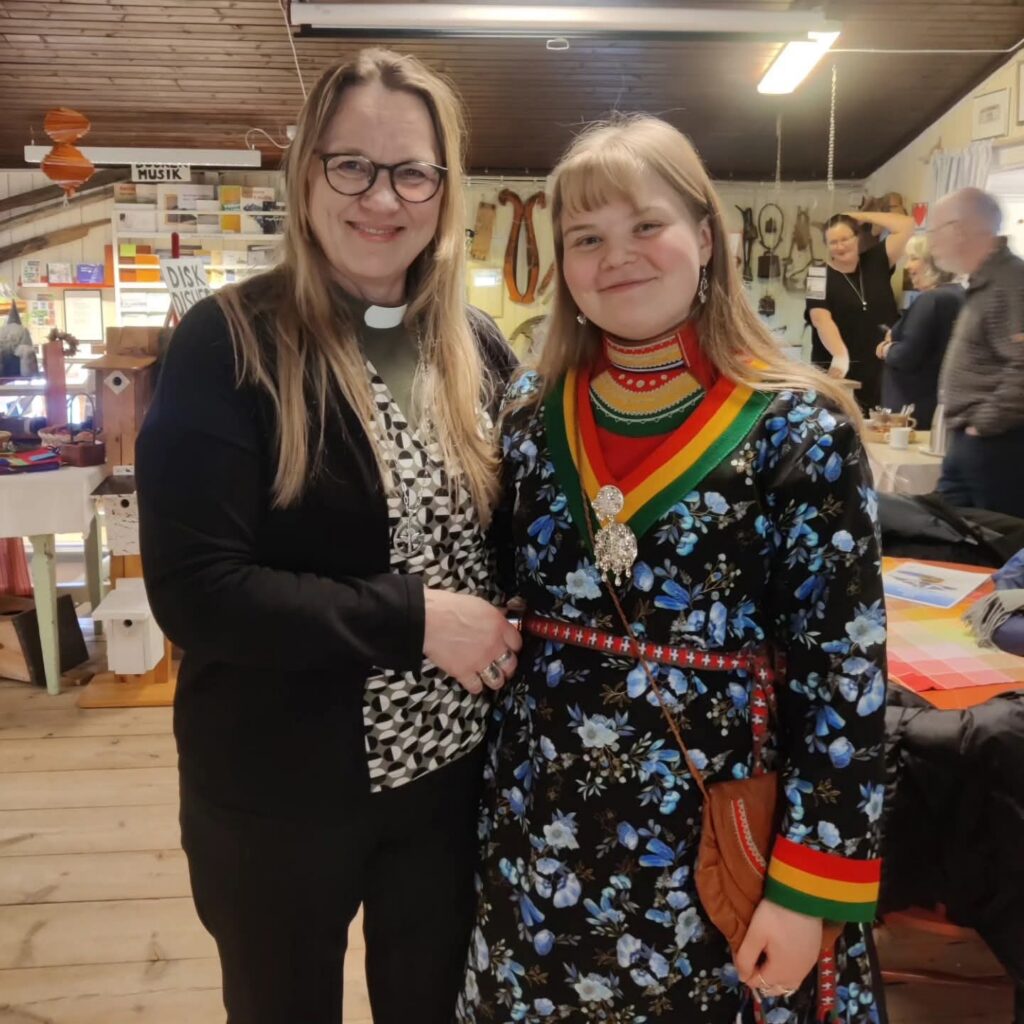
Later in our time in Sweden, we were joined by the Norwich diocesan director of mission and ministry and four rural deans and continued reflection on the Sámi people in Sweden which the Archdeacon and I had earlier begun in Piteå. The Sámi were the original inhabitants of northern lands crossing modern Norway, Sweden, Finland and the Kola peninsula (Russia) until Swedish farmers and settlers gradually alienated them from their traditional lands, disturbing their reindeer migrations and prohibiting their languages. Children were educated in Swedish, often forcibly removed from their families and placed in ‘Nomad’ schools where they learned not Sámi but Swedish language, culture and values. The trauma of these times is indescribable, the effect on Sámi today immeasurable and lasting. The Swedish church has made two formal apologies and has a diocesan officer appointed to lead on Sámi reconciliation but it is urgent that the church ask and continue to ask, ‘What is in your hand?’ What are the Sámi spiritual values, values often connected to the land and to nature, which must be allowed to live again and to inform their Christian faith and that of the whole Swedish church? Both before and after the international conference, we spent days with Sámi: a Sámi priest, a member of the Sámi Parliament and a young Sámi woman. Sámi have so much to teach a world which has forgotten how to respect and care for the planet and we were humbled to listen to some of what they were willing to share with us.
Racial Justice in the Church of England
There are many parallels with our own racial justice work in the Diocese of Norwich and the wider Church of England. This is work which must be done with acute sensitivity in listening to those who bear the scars of wounding history, characterized by an absence of ‘doing to’, by humility and a willingness to learn. Several of our group are members of Norwich Diocese’s Racial Justice Action Group, focusing on implementing From Lament to Action. We were appalled at the extent to which research originating in Sweden had not only damaged the Sámi but also informed National Socialism and the evils of the Second World War which came from that. The experience of racial injustice in another context brought home to me again and again how this scourge affects so much of the modern European and British context. The faith and example of Jesus makes overcoming racism an imperative for all Churches and Christians and inspires us with a holy determination to continue to overcome the barriers and boundaries racism set up, as Jesus did (Ephesians 2:14).
The Church of Sweden and Rural Deans
The Church of Sweden does not have archdeacons, some of whose functions are undertaken by diocesan officers. Like the Church of England, however, the Swedish Church does have Rural Deans, many of whom are energetically seeking to discern the shape and work to which God is calling us in the future. Rural deans in both churches gather their clergy to offer support, advice and to share best practice for mission and ministry. They are appointed for a limited time by the Bishop, after consultation with the clergy of the deanery. They are of strategic importance in ensuring that the Bishop hears the voice of the parishes and that the clergy and laity of the deanery are aware of episcopal thinking. We did not hear of an equivalent to the role of deanery lay chair, something perhaps for future conversations. We hope that there will be many of these.
Sharing and praying
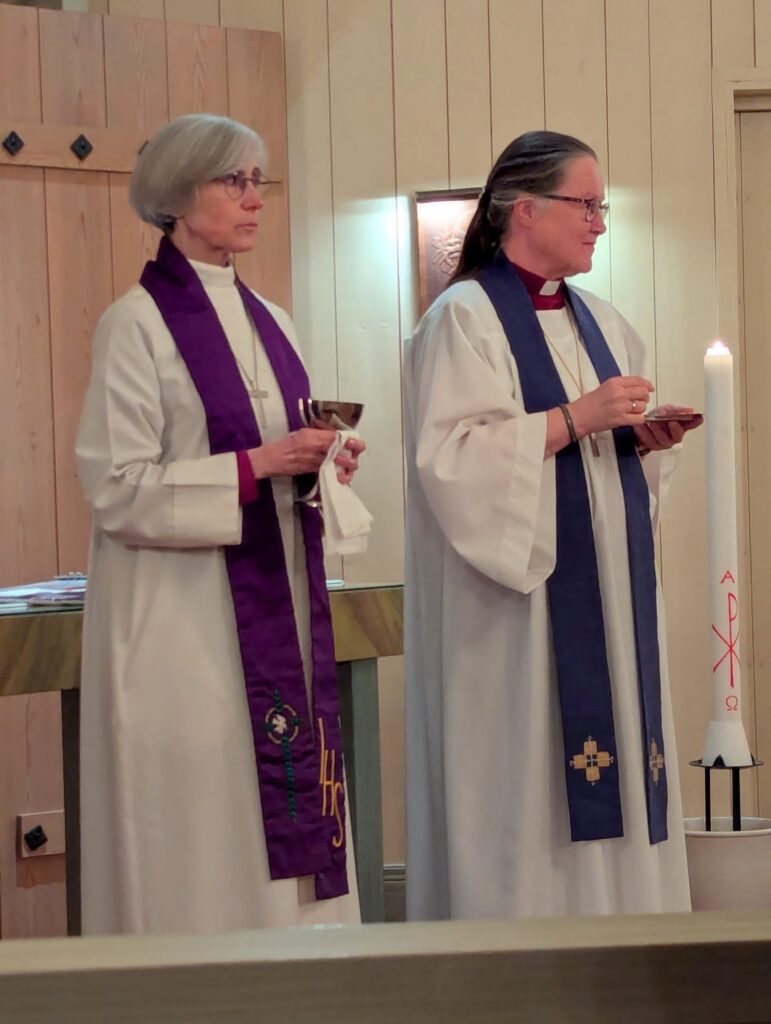
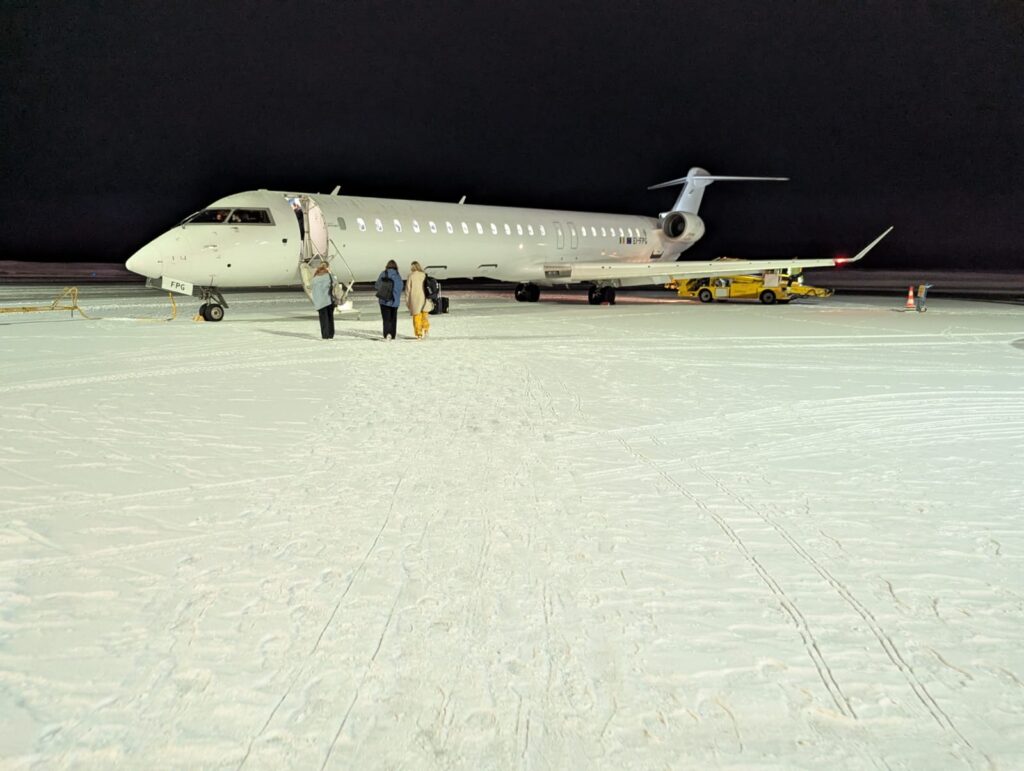
In the few days that we were with them, we prayed with our Swedish friends, laughed with them, shared some of our troubles and our challenges, and rediscovered a common hope in the love of God. We also experienced temperatures of -22 degrees and dry, falling snow – very different from the rainy and rather muddy England we had left behind. The beauty of the snow and the constellations on clear nights reminded me of C.S. Lewis’ book, The Discarded Image. He described with real love the mediaeval universe, a vast celestial Cathedral whose ceiling is illumined by stars and planets singing to glory of God, very different from the seeming bleakness of modern empty space. In the cold, winter landscape of northern Sweden, as the northern lights brightened the sky and the snow sparkled in sunlight, my sense of wonder was reawakened, and I gave thanks to God for all that we had seen and heard and learned.
Further comments
Revd Canon Richard Lamey, Director of Mission ad Ministry for the Diocese of Norwich said:
“What is so rich about our link with the Church of Sweden is that we are so close to each other in terms of our history, our place in society, and the challenges we face as Churches in Western Europe in the 21st century- and, at the same time, our history means that we have different resources and ideas and instincts about how we respond to the needs of our context. Seeing how another church, which is so like our own, engages with the world helps us to see how we respond and who we are. After we prayed together on the last night Bishop Asa said that Norwich is firmly in her heart. It is just brilliant to know that, in a world of increasing division and separation, so many people in the Diocese of Lulea are praying for us and longing for our flourishing and success, as we are for them.”
Revd Tim Yau, Rural Dean for Norwich North reflected on the meeting with some of the Sami people:
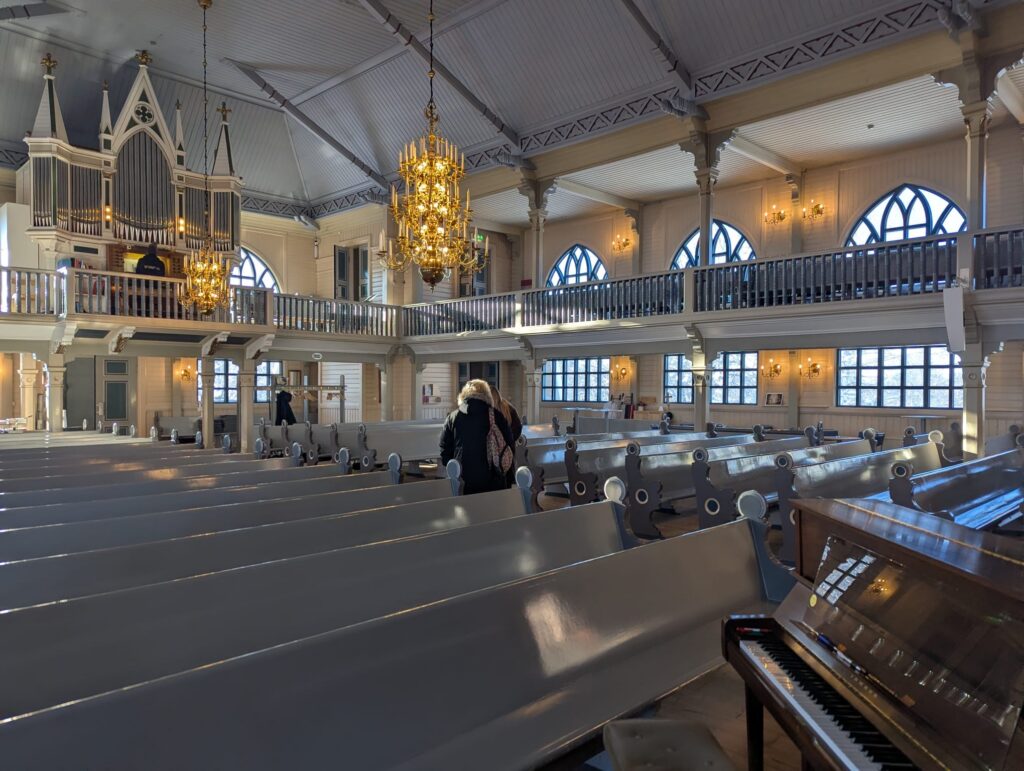
“On 24 February, we travelled to Arvidsjaur in Swedish Lapland to learn about Sámi history and church life. We were introduced to the Church of Sweden’s 2021 apology and 10-year reconciliation plan supporting Sámi language, culture, and representation. At Arvidsjaur Church, Sámi symbols, language resources, and traditional elements such as reindeer bells were integrated into worship. The visit to the old church site revealed the painful legacy of forced Christianisation and cultural suppression. A Sámi young woman’s testimony spoke of exclusion, identity, and hope. The visit resonated deeply with the Church of England’s From Lament to Action journey, evoking both sorrow and solidarity.
The visit to Arvidsjaur left me with gratitude and a holy restlessness. Hearing the stories of the Sámi people’s long struggle — the silencing of language, the suspicion, the need to defend identity — felt painfully familiar. It echoes the experience of Gypsy, Roma and Traveller communities in the UK, who are still too often met with suspicion rather than curiosity, and cruelty rather than compassion. Jesus pronounced, “Blessed are those who mourn, for they shall be comforted” (Matthew 5:4). I sensed both mourning and comfort here: lament held honestly, and reconciliation pursued courageously. The Lutheran Church of Sweden’s journey gives me hope that repentance, though costly, can become a doorway to grace for both Swedes & Sámis.”
Revd Canon David Longe, Rural Dean of Holt Deanery reflected on the Swedish Diaconate.
“In the Church of Sweden there are distinctive deacons and distinctive priests (unlike Anglicans, you cannot inhabit both orders). We spent a fascinating time exploring how the Swedish Diaconate emerged from the Deaconess movement of the 1830s to focus on philanthropy, while rooted in the love of Christ (echoing the Anglican 5 marks of mission). Around 80 deacons, men and women, provide vital social outreach in the Diocese, with a new deacon-led welfare support centre about to be launched in Skellefteå.”