Contact
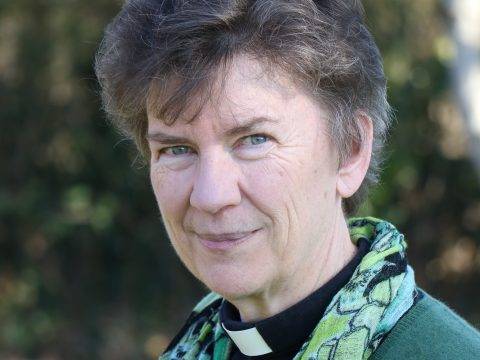
Revd Sue Hemsley Halls
Authorised Worship Assistant Coordinator
What is an Authorised Worship Assistant?
An Authorised Worship Assistant (AWA) is, within his or her own benefice, able to assist the incumbent with the Ministry of the Word and in conducting worship.
This might involve planning and delivering a Service of the Word, an act of All Age Worship, Morning or Evening Prayer, or assisting at some other service. This may be in the context of traditional church or a Fresh Expression. Authorisation allows the person to take the lead in an act of worship, assist with the administration of Communion, and/or deliver the Ministry of the Word through a talk or address.
Authorisation will be by letter from the appropriate Bishop, for a period of three years and on the joint recommendation of the incumbent and PCC. There are no requirements for formal training before authorisation is given, but as part of the support provided, there is an expectation of study and learning before the renewal of authorisation is sought after three years. Such ministry will be exercised under the authority of the incumbent and with appropriate supervision.
Introducing the AWA pathway
This initiative is aimed at encouraging clergy and lay people to work together more flexibly and creatively in ministry and mission. It springs from the conviction that “ministry belongs to all God’s people”, and is an attempt to embed this conviction more firmly in the life of our churches.
There are many ways in which lay Christians share in the life and witness of our churches, but the leading of worship and the Ministry of the Word have traditionally been reserved to those who hold the Bishop’s license.
We continue to rejoice in the commitment and contribution of those who offer and train as deacons, priests and Readers. Alongside their ministry we are keen to release other gifts among those who are not able, or not yet able to follow that path.
An Authorised Worship Assistant (AWA) will be called out from a congregation through the agreement of the incumbent and PCC. An AWA will be able to exercise a ministry of leading worship and assisting with the Ministry of the Word, giving an address or talk in the context of worship.
This role might be of particular importance in the context of a Fresh Expression, or as a response to the needs of a multi-parish benefice. Equally, there are many older Christians who have rich experience of faith in the life of the church who might be able to use their gifts through this new initiative. It is also hoped that some younger Christians might use the opportunity of AWA to begin to develop a ministry, and perhaps use the experience to help discern a vocation to ordination or Reader ministry in due course.
Crucial to the success of the ministry of an AWA will be the support and guidance given by the incumbent. An AWA will only be able to exercise a ministry in the parish with the approval and under the authority of the incumbent. There are many opportunities for study and training that will support those who exercise this ministry, and it is hoped that deaneries might wish to do some of that work together across parish boundaries.
This ministry will be authorised by the Bishop, but the AWA will be accountable to the incumbent of the parish in which they worship and serve.
Christians have always believed God provides all the resources that are needed to fulfill his mission in the world. This initiative aims to unlock the gifts latent in our congregations so that the local church may be strengthened in its worship and witness.
Further details of this initiative are available in the booklet.
The Three Year Review
AWAs are authorised for a period of three years. Towards the end of this period, a letter will be received from the Bishop inviting the AWA to review their role if they and the parish wish the authorisation to be renewed. The AWA should prepare the following in preparation for a review meeting with their Incumbent/Supervisor.
1. A brief log
- A list of services led and the range of styles of worship. We would simply like an idea of the approximate regularity and range of services you have led or helped lead.
- How often have you met for personal or group supervision with yourincumbent /supervisor. Again, we are only looking for approximate figures and frequency.
- A record of learning that you have undertaken (courses, day conferences, deanery training events, books or articles you have found helpful)
2. An example of learning
- Please give an example of learning you have undertaken (training session/event, reading, or online learning). Please identify in a paragraph or two what was helpful for you or for your ministry.
- Alternatively, you may prefer to describe a service or services you have led after which you reflected and learned from the experience. Again, just a paragraph or two.
- Your learning log must include confirmation that you have undertaken the appropriate online safeguarding training: Basic Awareness (C0) and Safeguarding Foundations (C1) modules, and the Awareness of Domestic Abuse module (Please note, this training needs to be renewed every three years).
The training can be found at https://safeguardingtraining.cofeportal.org/.
A third module, Leadership (C2) is available for those with particular leadership responsibilities. Please check with your incumbent and the Diocesan Safeguarding Adviser if you feel this is appropriate for your particular role.
3. Personal review
- Please provide a short, reflective piece of writing (a side of A4 maximum) describing your own faith journey during the last three years. How has your faith deepened and your discipleship developed, whether through leading worship, training events, mentoring or other events. How have you seen God walking with you in this journey?
After your local review meeting, please include with your folder the following: - A letter of commendation from the Incumbent following on from the discussion about your review papers. This should be looked at together before submission.
Please send these papers (email or post) before the date your authorisation expires to:
The Revd Sue Hemsley Halls
23 High Bungay Road
Loddon
Norfolk
NR 14 6JS
Ongoing Learning and Development
The authorisation of an AWA involves a commitment to ongoing learning and development.
This can include:
- Reflecting on experiences of leading worship and preparing for new tasks with their Supervisor, other clergy person, or an experienced Local Lay Minister (LLM)
- Opportunities for shared learning across the Deanery
- Attending courses and online courses which support the work undertaken by AWA’s (Details on the diocesan website or in AWA mailings)
- Reading and research to deepen theological and biblical understanding
- Retreats, Christian festivals, or Spiritual Direction to encourage prayerful reflection and to nurture faith and spirituality
- Courses and online resources from appropriate providers such as theological training colleges and courses, CPAS, other dioceses.
Meet an AWA
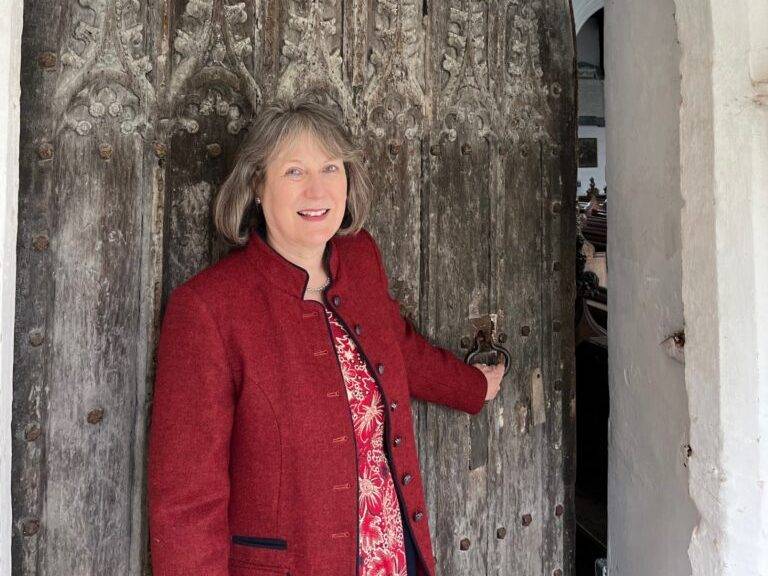
When I was asked if I had thought about becoming an AWA I gave it careful thought and spoke to friends who have known me for years and to close members of my family. I asked if they could see me undertaking this role and received a positive response. I also discussed it with a Chaplain I know and we prayed about it together.
Once I felt ready I gave my answer and the application process began. In Spring 2025, on a sunny Sunday morning, I was commissioned as an AWA during the regular Holy Communion Service.
Since then, I have developed and extended my knowledge and skills under the kind guidance of my Supervisor and received encouragement and support from the other members of the Ministry Team. I have attended various lectures and courses including those offered by the Norwich Centre for Christian Learning. Being an avid reader I was already a member of the Cathedral Library. Now I find their extensive collection of books a wonderful resource when researching and constructing talks for delivery in church.
If you were to ask me what I enjoy most about being an AWA I would admit that carefully thinking about a talk I’ve been asked to do, then gradually putting it together and ultimately delivering it to the congregation is very rewarding. The feedback received has encouraged me and I feel suitably supported.
Closeness to God is something I tend to feel most strongly when I am experiencing my own “smallness” which can equally be in the open countryside, inside the sturdy walls of an historic rural church or within the vastness of a cathedral.
I consider my ministry as an AWA, and my role of almost a decade as a volunteer guide at Norwich Cathedral, to be a great privilege for which I am truly thankful.
Angela, AWA in Brooke benefice