Tree-plundering parties, a saint with a crown of candles, rice pudding and Donald Duck are just some of the ways Christmas is celebrated in Sweden.
With the Diocese of Norwich linked to Luleå for more than 20 years, we wondered how our friends in Sweden celebrate Christmas, or Jul (pronounced Yule) in Swedish.
This is a longer version of a piece included in the new Winter 2026-27 Prayer Diary, which has an international theme.
Some traditions, including midnight mass, gifts and festive feasts are familiar to us – but some are surprisingly different.
St Lucy’s Day, on December 13, is an important part of Christmas in Sweden. A girl dressed in white with a crown of candles leads a procession of white-clad attendants and children dressed as stars, gingerbread men and elves. Saffron buns and gingerbread are served afterwards.
Many churches host the processions which celebrate the triumph of light over darkness and 4th century martyr St Lucy, who brought food to persecuted Christians hiding in the Roman catacombs, lighting her way with a headdress of candles.
For many Swedish people the main Christmas church service is a short family service on Christmas Eve afternoon.
Presents are opened on Christmas Eve, with gifts brought by a Swedish cousin of Father Christmas called Jultomte, who knocks on the door to ask: “Are there any good children here?” Curiously, he often arrives just as Dad has popped out.
The main festive meal, served on Christmas Eve, is a smorgasbord called Julbord. It often includes picked herrings, salmon, a ham, meatballs, small sausages, reindeer meat, beetroot salad and a potato and anchovy casserole. Dessert is rice pudding, with a prize for whoever finds the hidden almond, all washed down with a dark, sweet cola-like soft drink or mulled wine.
Every Christmas Eve at 3pm millions of Swedes turn on the television to watch the 1958 Disney film Donald Duck and His Friends Wish You a Merry Christmas.
Swedish Christmas trees, decorated with straw ornaments and woven paper hearts as well as lights and baubles and sweets, traditionally stay up until January 13 or St Knut’s Day (Knut was a Danish prince murdered by his cousin in 1131) when children eat any remaining edible decorations at ‘tree plundering’ parties.
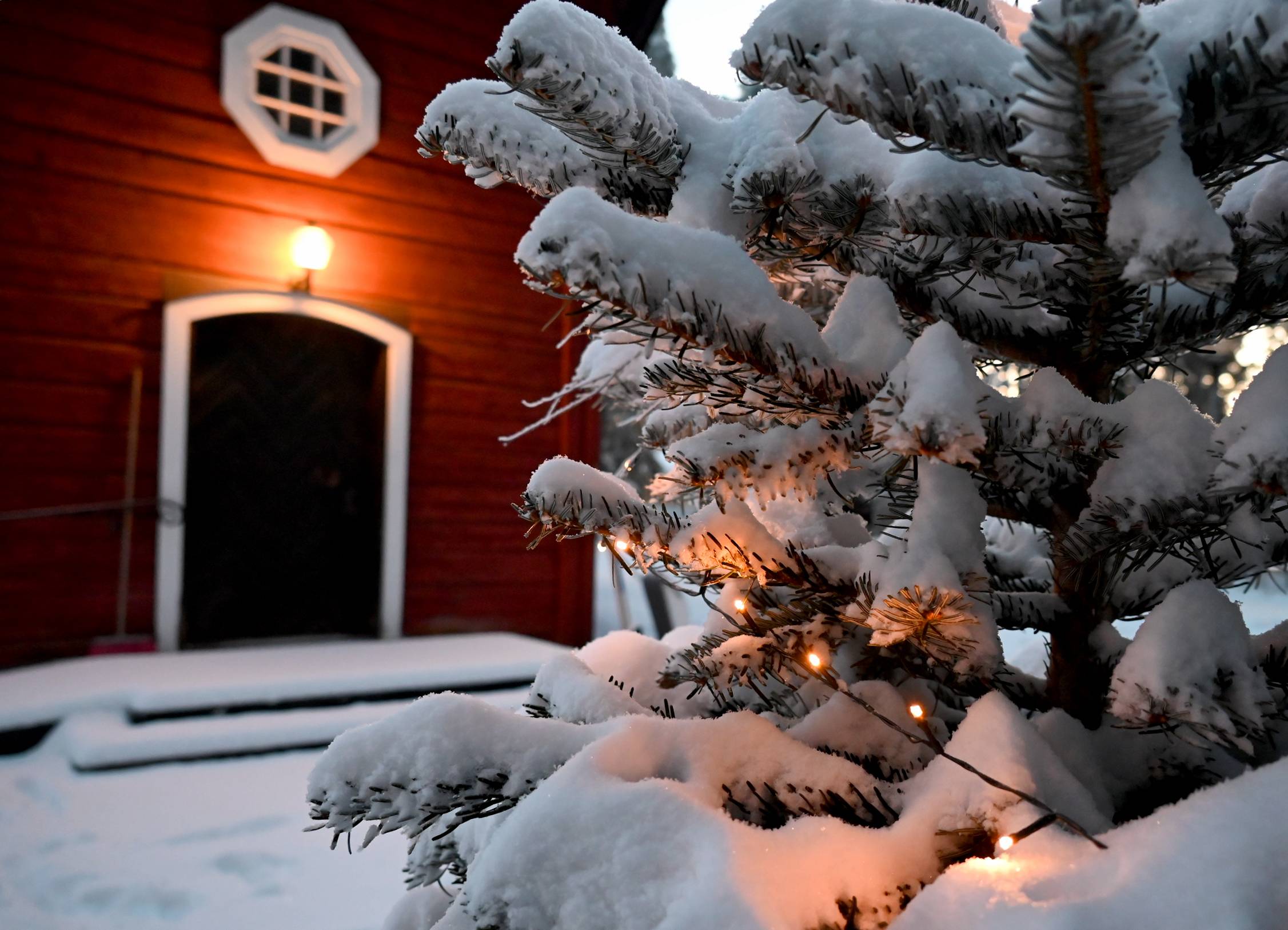

Did you know?
Luleå is pronounced LOO-lay-oh.
The diocese is the northernmost of the Church of Sweden’s 13 dioceses and covers a third of the country, by area.
It is north of Arctic circle, with dark days and nights in winter, and the midnight sun in summer.
Temperatures plunge below minus 30 degrees centigrade in winter, with lots of snow, and hit plus 30 degrees centigrade in summer.
Around 60 per cent of Swedish people identify as Christian, with more than half the population members of the Church of Sweden, which was the established church until 2000.
The 1,312 islands of Luleå make up the world’s largest brackish water (partially salty) archipelago.
The city is a port and has a steelworks, the northernmost university in Sweden and is home to part of the Swedish Air Force.
The world’s first indoor shopping mall was opened in Luleå in 1955 – named Shopping.
It hosts the Swedish Yukigassen (snowball fighting) championship every winter.