The number of churches in the Diocese of Norwich
In Norfolk and Waveney, there are church communities across 550 parishes.
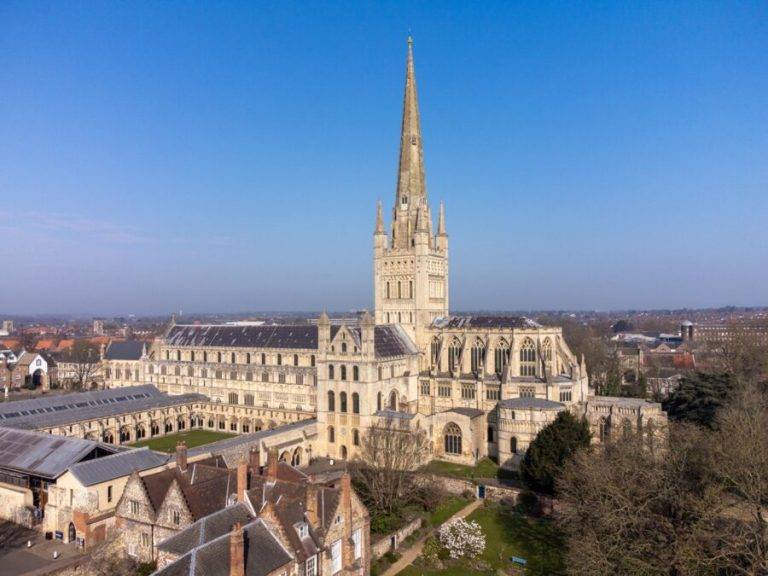
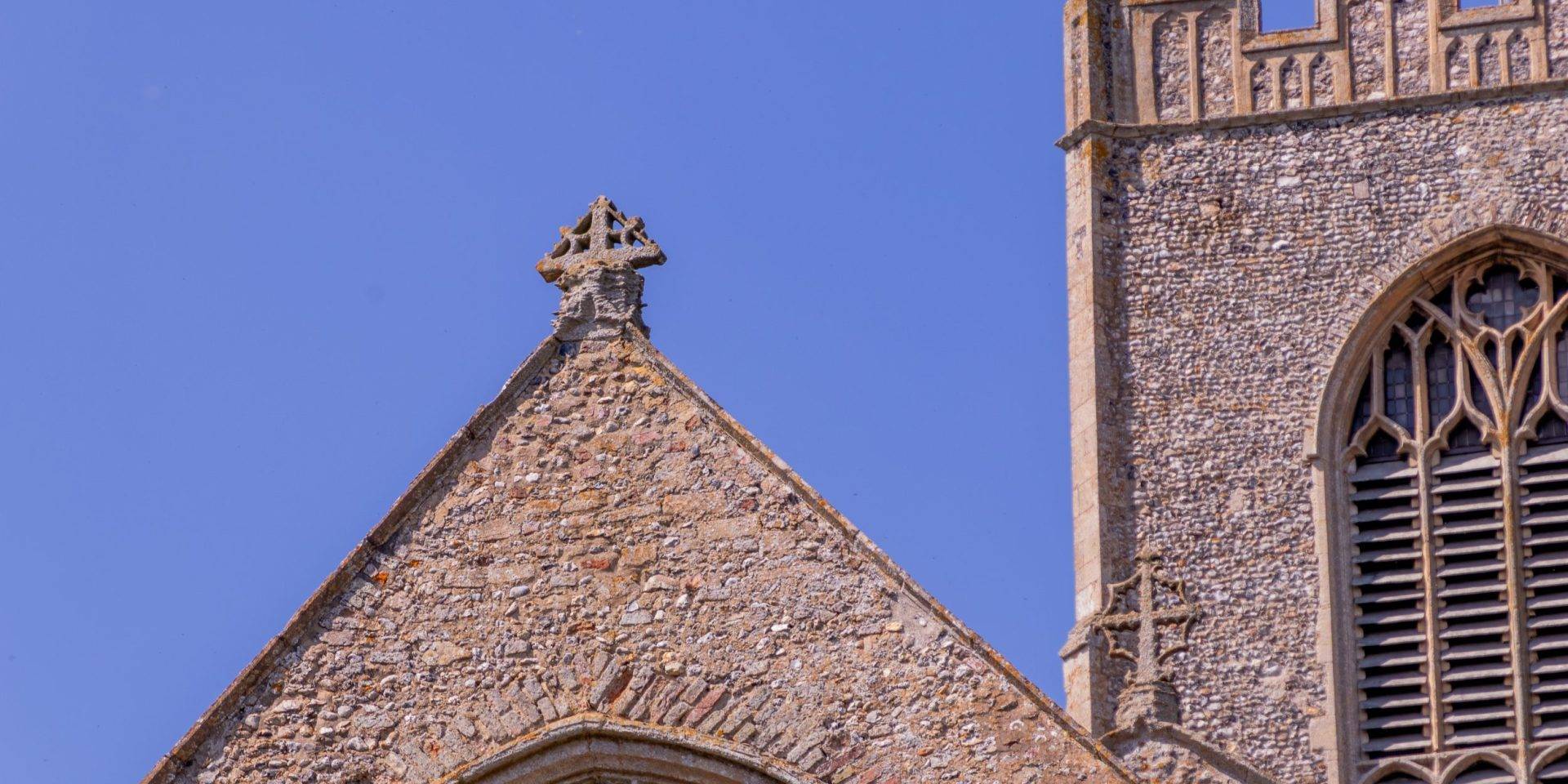
With 634 churches, the Diocese of Norwich is second only to the Diocese of Oxford in terms of the number of church buildings but it has the highest concentration of medieval churches anywhere in the world. Taking into account churches vested in external trusts, the number reaches 700. Over 90% of our churches are listed and many are of the highest significance nationally. Norfolk is known for its round tower and thatched churches, and its towers act as landmarks in the wide East Anglian sky.
Most of our church buildings are regularly used for prayer and worship. Others may be used infrequently for the key festivals in the church calendar. The majority are open for visitors every day. There are also many church ruins.
I'm looking for my nearest Anglican church
Go to A Church Near You and type in your postcode, village, town or city.
I'm looking for a church to visit as a tourist
Our churches tell England’s national and local stories, and are at the heart of our cultural heritage. Whether you’re in the Brecks, on the Broads, in the Fens, at the coast or in towns and villages, historic
churches abound. Visit our sister website Exploring Norfolk Churches to discover articles on history and architecture, walking and cycling routes, ideas for days out, and a wealth of photos and practical information for planning a visit.
I'm looking for a particular deanery
Visit the deanery map here: (to add)
I am on the PCC and I am looking for the church building pages
Visit the church buildings page here.
A selection of churches in the Diocese of Norwich
We have some extraordinary church buildings and you are welcome to explore as many as you can!
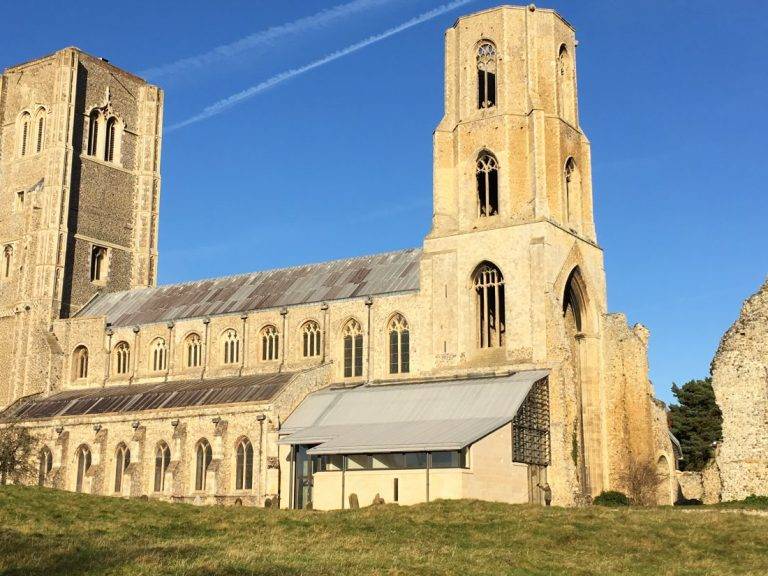
Wymondham Abbey
Wymondham Abbey is a magnificent Norman church, established in 1107, as part of a monastic foundation. The people of Wymondham have been coming here for more than 900 years, for public worship and private prayer.
It is an active parish with a wide variety of groups, The building itself is strikingly beautiful and historically important, so it is a popular visitor destination. You can read more about its history and active ministry on the website.
St Benet's Abbey
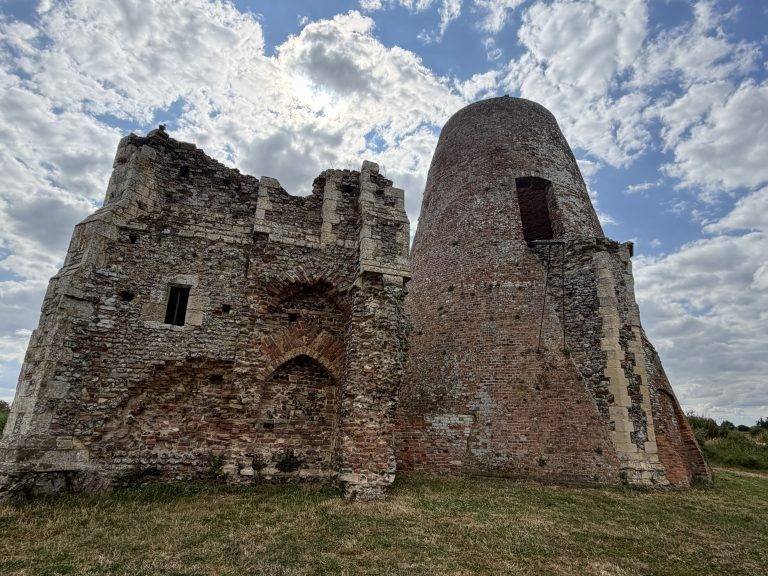
The Abbey of St Benet at Holme lies deep in the Broads, close to the meeting place of the rivers Bure and Ant. This was the only Norfolk monastery founded in the Anglo-Saxon period which continued in use throughout the Middle Ages, and is the only monastery in England which was not closed down by Henry VIII – the Bishop of Norwich is still the Abbot.
Today the Norfolk Archaeological Trust owns St Benet’s Abbey. The Bishop of Norwich takes an annual service here, travelling to and from the Abbey on a wherry.
The Julian Shrine
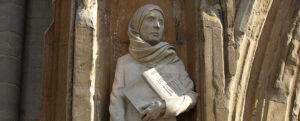
In the 14th century Norwich a young woman became gravely ill, during which time she experienced a series of extraordinary visions. These revelations transformed her life, and after an unexpected recovery she took vows to live as an Anchoress, locking herself away in a small cell attached to a church in Norwich. In this cell, she wrote an account of the revelations she had received and in so doing became the first woman to write a book in English.
Walsingham Shrine
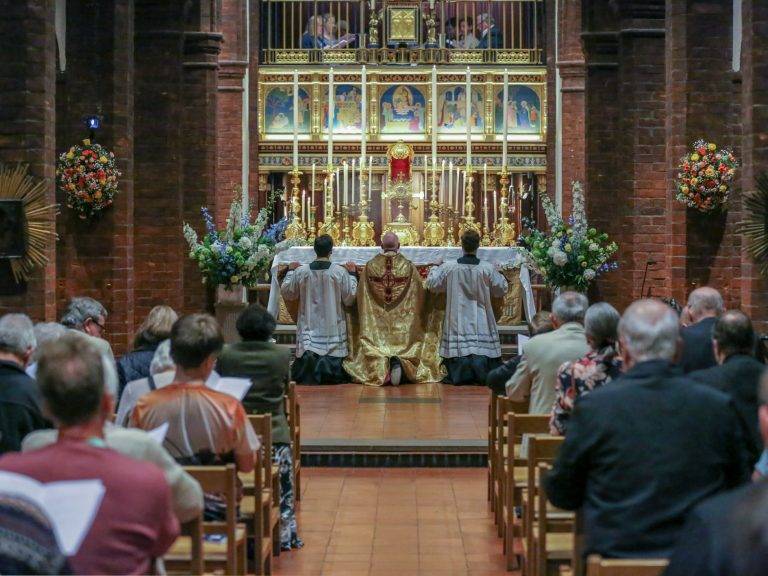
Founded by the Lady Richeldis in 1061, destroyed by Henry VIII in 1538, restored in 1922 by Father Hope Patten, the Anglican Vicar of Walsingham – the Anglican Shrine of Our Lady of Walsingham has had an eventful history across nearly a thousand years. This medieval place of pilgrimage, which rivalled Canterbury as a destination, was visited by thousands of pilgrims from all across Britain and Europe. It became known as ‘England’s Nazareth’ because of the nature of the vision which the Lady Richeldis experienced.
King's Lynn Minster
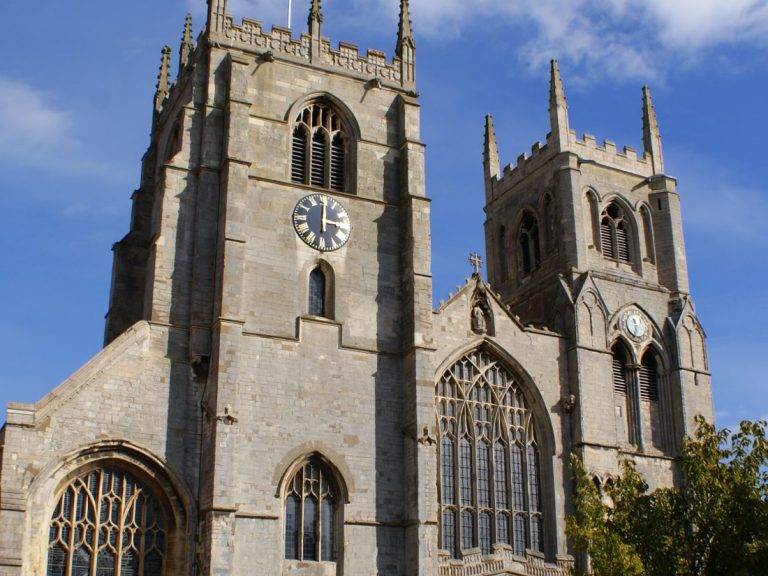
King’s Lynn Minster is situated in the historic surroundings of the Saturday Market Place in the heart of King’s Lynn. Founded by the first Bishop of Norwich, Herbert de Losinga, in 1101, the Minster has offered a welcome to pilgrims and visitors for over 900 years.
In December 2011 the Bishop of Norwich dedicated The Priory and Parish Church of St Margaret as King’s Lynn Minster.
The Minster is open all day, every day. Visitors are welcome to attend any service or just walk around and enjoy the atmosphere of this Historic and Holy Church.
Great Yarmouth Minster
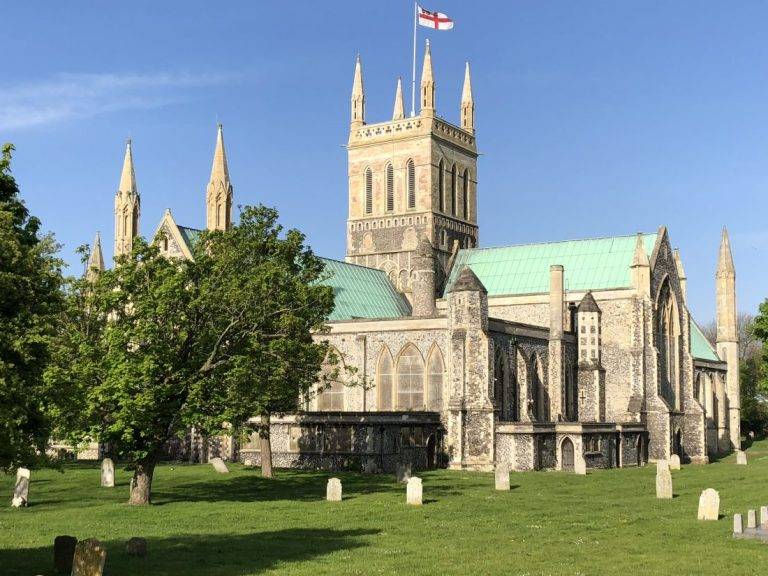
St Nicholas’ Church and Priory was founded by Herbert de Losinga (Bishop of Norwich) in 1101. It is the largest parish church in the country and arguably the oldest building in Great Yarmouth.
In 1942 the church was completely gutted during a German air raid leaving only the Norman tower and the walls standing. The church was rebuilt (designed by the architect Stephen Dykes Bower) and reconsecrated in 1961 by the Bishop of Norwich.
On 9 December 2011 the Bishop of Norwich designated St Nicholas Church, Great Yarmouth a Minster Church.
Norwich Cathedral
For more than 900 years, Norwich Cathedral’s spire has risen high above the city’s skyline and its ancient architecture echoes with stories.
From its beginnings as a Benedictine monastery to its role as a modern-day cathedral, there is so much to explore. Whether you’re visiting for the first time or regularly pop into the Cathedral, there’s always something new to discover.